
BeDict Logo

planets

/ˈplænɪts/
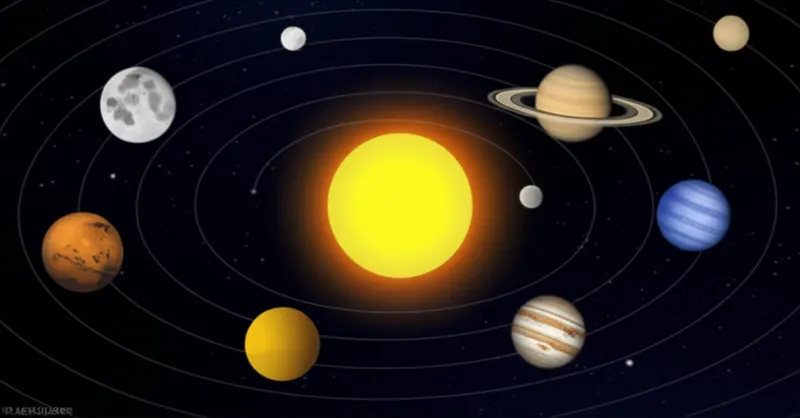
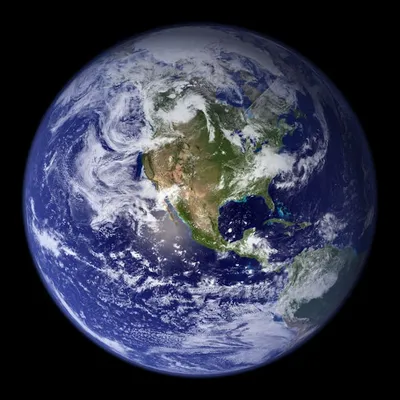
Visual illustration of planets: A body which orbits the Sun directly and is massive enough to be in hydrostatic equilibrium (effectively meaning a spheroid) and to dominate its orbit; specifically, the eight major bodies of Mercury, Venus, Earth, Mars, Jupiter, Saturn, Uranus, and Neptune. (Pluto was considered a planet until 2006 and has now been reclassified as a dwarf planet.) - Image 1
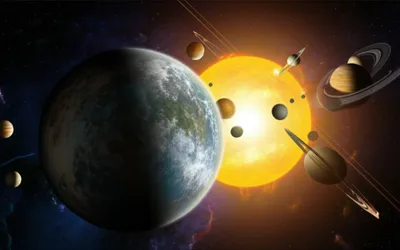
planets: A body which orbits the Sun directly and is massive enough to be in hydrostatic equilibrium (effectively meaning a spheroid) and to dominate its orbit; specifically, the eight major bodies of Mercury, Venus, Earth, Mars, Jupiter, Saturn, Uranus, and Neptune. (Pluto was considered a planet until 2006 and has now been reclassified as a dwarf planet.) - Thumbnail 1
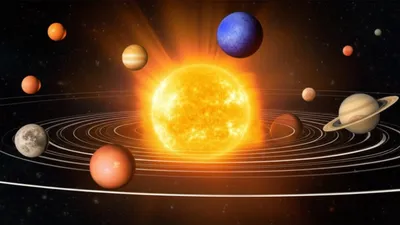
planets: A body which orbits the Sun directly and is massive enough to be in hydrostatic equilibrium (effectively meaning a spheroid) and to dominate its orbit; specifically, the eight major bodies of Mercury, Venus, Earth, Mars, Jupiter, Saturn, Uranus, and Neptune. (Pluto was considered a planet until 2006 and has now been reclassified as a dwarf planet.) - Thumbnail 2
noun

A body which orbits the Sun directly and is massive enough to be in hydrostatic equilibrium (effectively meaning a spheroid) and to dominate its orbit; specifically, the eight major bodies of Mercury, Venus, Earth, Mars, Jupiter, Saturn, Uranus, and Neptune. (Pluto was considered a planet until 2006 and has now been reclassified as a dwarf planet.)