







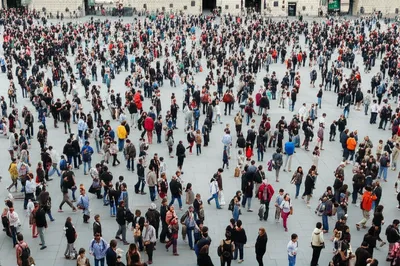
noun🔗Shareलोग, जनताUsed as plural of person; a body of human beings considered generally or collectively; a group of two or more persons."There were so many people at the restaurant last night."कल रात रेस्तरां में बहुत सारे लोग थे।humanpersongroupsocietynationessentialChat with AIVocabulary GamePractice Reading
noun🔗Shareलोग, जनता, लोगPersons forming or belonging to a particular group, such as a nation, class, ethnic group, country, family, etc."The school's student people are very diverse, coming from many different backgrounds. "स्कूल के छात्र विविध हैं, जो विभिन्न पृष्ठभूमियों से आते हैं।personhumangroupnationfamilysocietyessentialChat with AIVocabulary GamePractice Reading
noun🔗Shareकर्मचारी, अनुयायी, साथी, प्रजाA group of persons regarded as being employees, followers, companions or subjects of a ruler."The school's student people were excited for the upcoming field trip. "स्कूल के छात्र आगामी फील्ड ट्रिप के लिए उत्साहित थे।groupgovernmentnationhumanpersonstateorganizationsocietyessentialChat with AIVocabulary GamePractice Reading
noun🔗Shareसहकर्मी, कर्मचारीOne's colleagues or employees."My colleagues and I are working together to finish the project by Friday. "मेरे सहकर्मी और मैं शुक्रवार तक परियोजना को पूरा करने के लिए एक साथ काम कर रहे हैं।businessworkorganizationjobessentialChat with AIVocabulary GamePractice Reading
noun🔗Shareपूर्वज, रिश्तेदार, परिवारA person's ancestors, relatives or family."My people lived through the Black Plague and the Thirty Years War."मेरे पूर्वजों ने ब्लैक प्लेग और तीस साल के युद्ध को झेला।familyhumanpersonessentialChat with AIVocabulary GamePractice Reading
noun🔗Shareलोग, जनता, आबादीThe mass of a community as distinguished from a special class (elite); the commonalty; the populace; the vulgar; the common crowd; the citizens."The school principal addressed the people of the town at the annual meeting. "स्कूल के प्रधानाचार्य ने वार्षिक बैठक में शहर के लोगों को संबोधित किया।humanpersongroupsocietypoliticsnationgovernmentessentialChat with AIVocabulary GamePractice Reading
verb🔗Shareआबादी करना, बसानाTo stock with people or inhabitants; to fill as with people; to populate."The town council is trying to people the new housing development. "नगर परिषद नए आवास विकास को आबाद करने की कोशिश कर रही है।humanpersongroupnationworldsocietyessentialChat with AIVocabulary GamePractice Reading
verb🔗Shareआबादी होना, बसनाTo become populous or populated."The small town is hoping to people its schools with new students. "छोटा शहर नए छात्रों के साथ अपने स्कूलों को आबाद करने की उम्मीद कर रहा है।environmentworldareageographysocietyhumanessentialChat with AIVocabulary GamePractice Reading
verb🔗Shareआबादी करना, बसनाTo inhabit; to occupy; to populate."Many students people the classrooms each morning. "कई छात्र हर सुबह कक्षाओं में बसते हैं।worldgeographyhumanenvironmentnationareaplacesocietyessentialChat with AIVocabulary GamePractice Reading
verb🔗Shareलोगों के साथ बातचीत करना, घुलना-मिलनाTo interact with people; to socialize."The students are peopleing at the school cafeteria during lunch break. "छात्र दोपहर के भोजन की छुट्टी के दौरान स्कूल के कैफे में घुल-मिल रहे हैं।humanpersoncommunicationsocietygroupactionentertainmentessentialChat with AIVocabulary GamePractice Reading
noun🔗Shareव्यक्ति, इंसानAn individual; usually a human being."Each person is unique, both mentally and physically."प्रत्येक व्यक्ति अद्वितीय है, मानसिक और शारीरिक दोनों रूप से।humanpersonbeingessentialChat with AIVocabulary GamePractice Reading
noun🔗Shareशरीर, देहThe physical body of a being seen as distinct from the mind, character, etc."The athletes' people were very proud of their achievements. "एथलीटों के शरीर अपनी उपलब्धियों पर बहुत गर्वित थे।bodyhumanpersonbeingessentialChat with AIVocabulary GamePractice Reading
noun🔗Shareव्यक्ति, संगठनAny individual or formal organization with standing before the courts."At common law a corporation or a trust is legally a person."आम कानून में, एक निगम या ट्रस्ट कानूनी रूप से एक व्यक्ति है।laworganizationgovernmentbusinesssocietystateessentialChat with AIVocabulary GamePractice Reading
noun🔗Shareलिंग, शिश्नThe human genitalia; specifically, the penis."The doctor examined the patient's people to determine the cause of the pain. "डॉक्टर ने दर्द का कारण जानने के लिए मरीज के लिंग की जांच की।anatomyorganbodyphysiologysexhumanessentialChat with AIVocabulary GamePractice Reading
noun🔗Shareव्यक्ति, व्याकरणिक पुरुष(grammar) A linguistic category used to distinguish between the speaker of an utterance and those to whom or about whom he or she is speaking. See grammatical person."My family and I are in people one. "मैं और मेरा परिवार प्रथम पुरुष में हैं।grammarlanguagelinguisticsessentialChat with AIVocabulary GamePractice Reading
noun🔗Shareअंकुर, कली; पॉलिप; व्यक्तिA shoot or bud of a plant; a polyp or zooid of the compound Hydrozoa, Anthozoa, etc.; also, an individual, in the narrowest sense, among the higher animals."The hydrangea plant had many small people emerging from its stems. "हाइड्रेंजिया के पौधे में उसकी तनों से कई छोटे अंकुर निकल रहे थे।plantorganismanimalbiologyessentialChat with AIVocabulary GamePractice Reading