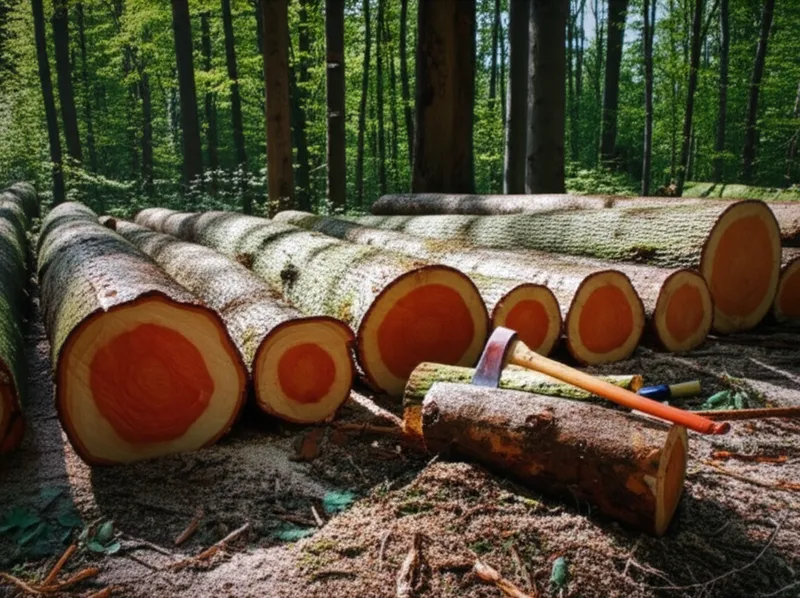
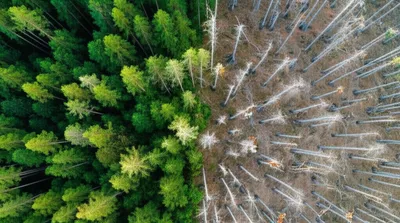
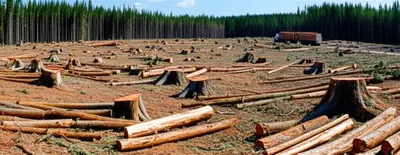


verb🔗Share나무를 벌목하다, 통나무로 만들다To cut trees into logs."The workers logged the forest to provide wood for building houses. "노동자들은 집을 짓기 위한 나무를 제공하기 위해 숲을 벌목했다.environmentagricultureindustryChat with AIVocabulary GamePractice Reading
verb🔗Share벌목하다, 베어내다To cut down (trees)."The company logged the forest to sell the timber. "회사는 목재를 팔기 위해 숲을 벌목했다.environmentagricultureindustryChat with AIVocabulary GamePractice Reading
verb🔗Share벌목하다, 나무를 베다To cut down trees in an area, harvesting and transporting the logs as wood."The company logged the forest to sell the lumber for building houses. "그 회사는 집을 짓기 위해 목재를 팔기 위해 숲을 벌목했다.environmentindustryagricultureworkChat with AIVocabulary GamePractice Reading
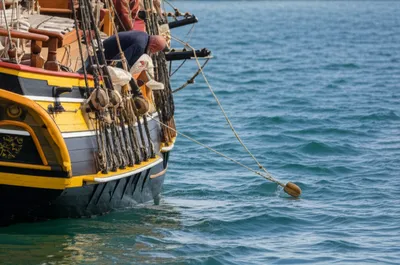
verb🔗Share기록하다, 로깅하다To make, to add an entry (or more) in a log or logbook."to log the miles travelled by a ship"배가 이동한 마일을 기록하다writingcomputingtechnologycommunicationinfoChat with AIVocabulary GamePractice Reading
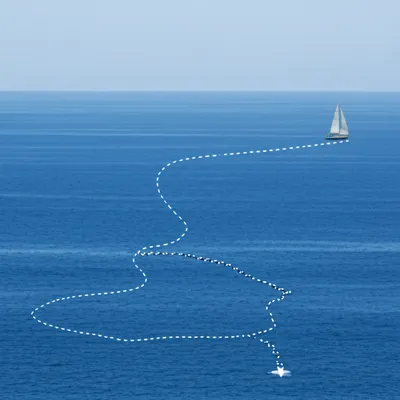
verb🔗Share기록하다To travel (a distance) as shown in a logbook"The hikers logged their daily progress in their expedition logbook. "등산객들은 탐험 일지에 매일의 진행 상황을 기록했다.nauticalvehiclesailingChat with AIVocabulary GamePractice Reading
verb🔗Share특정 속도로 항해하다To travel at a specified speed, as ascertained by chip log."The old sailing ship logged six knots against the outgoing tide. "그 낡은 범선은 밀물이 빠져나가는 것을 거슬러 6노트의 속도로 항해했다.nauticalsailingChat with AIVocabulary GamePractice Reading
verb🔗Share흔들리다, 끄덕이다To move to and fro; to rock."The baby in the stroller was logged back and forth, trying to get comfortable. "유모차 안의 아기는 편안해지려고 앞뒤로 흔들렸다.actionChat with AIVocabulary GamePractice Reading