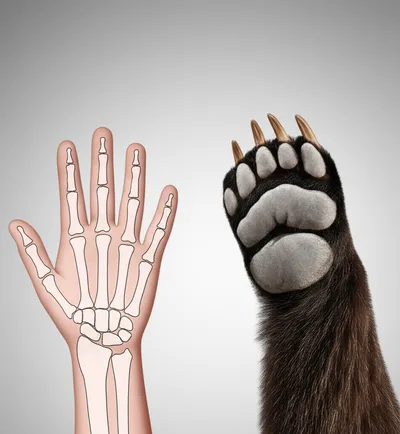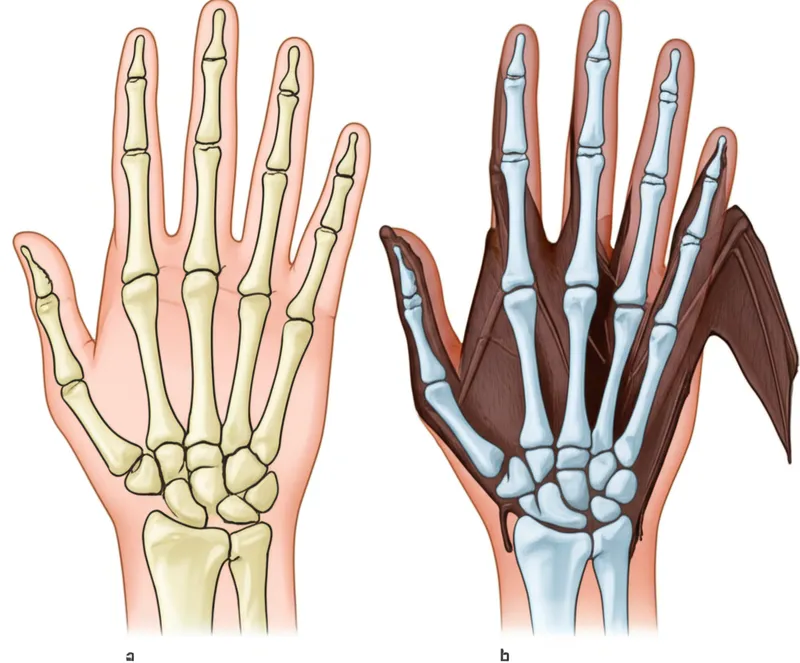


noun馃敆ShareSomething homologous; a homologous organ or part, chemical compound or a chromosome.""In our biology class, we learned that a bat's wing and a human arm are considered homologues because they share a similar bone structure inherited from a common ancestor." "biologychemistryanatomyorganmedicinesciencebiochemistrystructurepartChat with AIVocabulary GamePractice Reading
noun馃敆ShareA word shared by two languages or dialects."Many English and French words are homologues, such as "hotel" and "h么tel," making it easier for English speakers to learn French vocabulary. "languagelinguisticswordChat with AIVocabulary GamePractice Reading
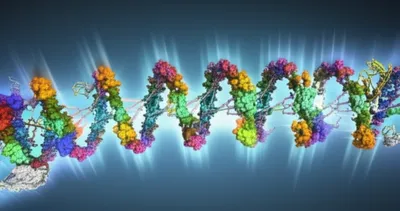
noun馃敆ShareOne of a group of similar DNA sequences that share a common ancestry."Because the two genes share significant sequence similarity and perform similar functions in different species, scientists believe they are homologues, descended from a common ancestral gene. "biologybiochemistryorganismgroupscienceChat with AIVocabulary GamePractice Reading
noun馃敆ShareA member of a homologous series"Here are the first four alkanes in the homologous series: methane, ethane, propane, and butane. Thus, butane and propane are homologues. "chemistrycompoundsubstanceChat with AIVocabulary GamePractice Reading