
adjunction
Meanings

Examples :
Adjunción
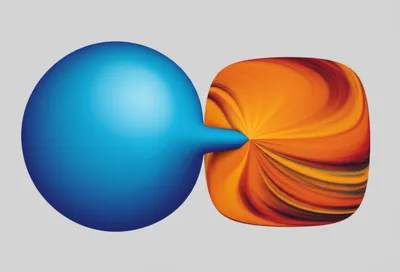
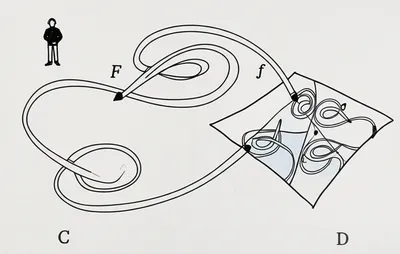
Given a pair of categories \mathcal{C} and \mathcal{D}: an anti-parallel pair of functors F:\mathcal{C}\rightarrow \mathcal{D} and G:\mathcal{D}\rightarrow \mathcal{C} and a natural transformation \eta:\mbox{id}C \rightarrow GF called “unit” such that for any object A \in \mathcal{C}, for any object B \in \mathcal{D}, and for any morphism f:A\rightarrow GB, there is a unique morphism g:FA\rightarrow B such that Gg \circ \etaA = f. (Note: there is another natural transformation called “counit” as well but its existence may be derived by theorem.) The pair of functors express a similarity between the pair of categories which is weaker than that of an equivalence of categories.
Examples :
"The professor explained the concept of adjunction between two mathematical structures using examples from group theory and linear algebra, showing how it establishes a formal connection between them. "
El profesor explicó el concepto de adjunción entre dos estructuras matemáticas utilizando ejemplos de la teoría de grupos y el álgebra lineal, mostrando cómo establece una conexión formal entre ellas.
Related Words

connection noun
/kəˈnɛkʃən/
Conexión, enlace
"The connection between the two classrooms was established by installing a new phone line. "









equivalence noun
/ɪˈkwɪvələns/
Equivalencia