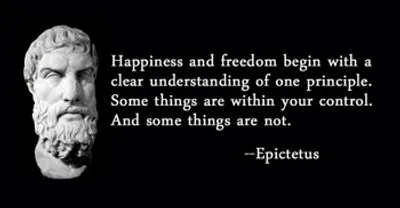
noun 다운로드 🔗공유 스토아 철학자 Proponent of stoicism, a school of thought, from in 300 B.C.E. up to about the time of Marcus Aurelius, who holds that by cultivating an understanding of the logos, or natural law, one can be free of suffering. Examples : "The stoic, focused on understanding natural law, found peace in accepting the challenges of his demanding job. " 자연법을 이해하는 데 집중한 스토아 철학자는 힘든 직업의 어려움을 받아들이면서 평화를 찾았다. philosophy character religion doctrine mind person history AI와 채팅어휘 게임독해 연습
noun 다운로드 🔗공유 스토아 철학자, 쾌락이나 고통에 무관심한 사람 A person indifferent to pleasure or pain. Examples : "The stoic accepted the criticism without showing any emotion. " 스토아 철학자는 어떤 감정도 드러내지 않고 비판을 받아들였다. philosophy character person mind attitude being AI와 채팅어휘 게임독해 연습
adjective 다운로드 🔗공유 스토아 철학의, 금욕적인 Of or relating to the Stoics or their ideas. Examples : "The teacher's stoic approach to student questions, emphasizing reason and acceptance, was admired by many. " 이성적이고 수용적인 태도를 강조하는 선생님의 스토아 철학적 접근 방식은 많은 사람들에게 존경을 받았다. philosophy character attitude mind being moral AI와 채팅어휘 게임독해 연습
adjective 다운로드 🔗공유 냉담한, 둔감한 Not affected by pain or distress. Examples : "Even when he failed the test, he remained stoic and didn't show any disappointment. " 그는 시험에 떨어졌을 때조차 냉담한 태도를 유지하며 실망감을 전혀 드러내지 않았다. character philosophy attitude mind AI와 채팅어휘 게임독해 연습
adjective 다운로드 🔗공유 냉정한, 태연한 Not displaying any external signs of being affected by pain or distress. Examples : "Despite the difficult news, Sarah remained stoic, showing no outward emotion. " 어려운 소식에도 불구하고, 사라 는 냉정함을 유지하며 겉으로 드러나는 감정을 보이지 않았다. attitude character philosophy emotion mind suffering AI와 채팅어휘 게임독해 연습