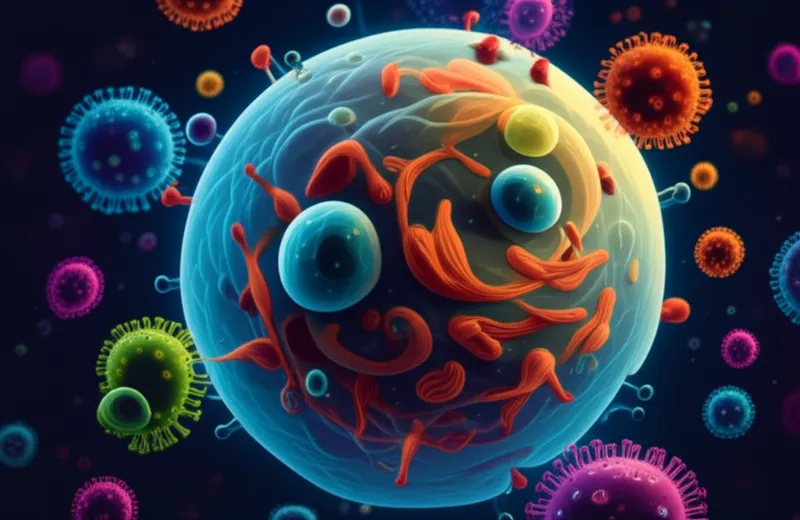

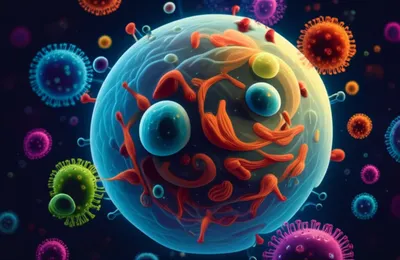
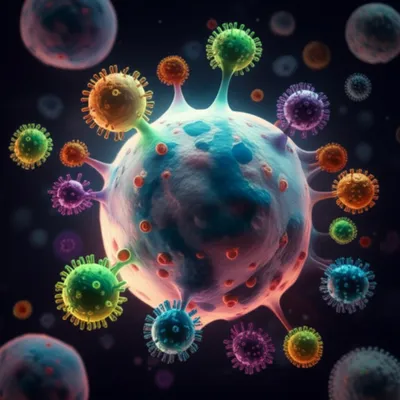

noun🔗Share바이러스A submicroscopic, non-cellular structure consisting of a core of DNA or RNA surrounded by a protein coat, that requires a living host cell to replicate, and often causes disease in the host organism.""Washing your hands often can help prevent the spread of viruses, which can make you sick." "손을 자주 씻는 것은 바이러스의 확산을 막는 데 도움이 될 수 있으며, 이는 당신을 아프게 할 수 있습니다.virusmedicinediseasemicroorganismbiologyscienceChat with AIVocabulary GamePractice Reading
noun🔗Share이 유기체로 인해 발생하는 질병A disease caused by these organisms."He caught a virus and had to stay home from school."그는 바이러스에 걸려 학교에 가지 못하고 집에 있어야 했다.virusdiseasemicroorganismmedicinebiologyChat with AIVocabulary GamePractice Reading
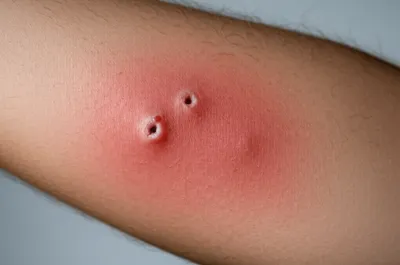
noun🔗Share독Venom, as produced by a poisonous animal etc."Some ancient texts describe snakebites causing death through the effects of viruses injected into the victim. "일부 고대 텍스트는 희생자에게 주입된 독의 영향으로 뱀에 물려 죽는 것을 묘사합니다.biologymedicinediseaseanimalmicroorganismChat with AIVocabulary GamePractice Reading
noun🔗Share바이러스, 악성 소프트웨어A type of malware which can covertly transmit itself between computers via networks (especially the Internet) or removable storage such as disks, often causing damage to systems and data; also computer virus."The school network was infected with viruses, slowing down everyone's computers and preventing access to important files. "학교 네트워크가 바이러스에 감염되어 모든 사람의 컴퓨터 속도가 느려지고 중요한 파일에 접근할 수 없게 되었습니다.computinginternetvirustechnologytechnicalelectronicsmachinesystemdiseasemicroorganismscienceChat with AIVocabulary GamePractice Reading
noun🔗Share악성코드Any type of malware."The computer technician warned us about the viruses that could damage our files. "컴퓨터 기술자는 우리 파일에 손상을 줄 수 있는 악성코드에 대해 경고했습니다.viruscomputingtechnologyinternetelectronicsmicroorganismdiseasescienceChat with AIVocabulary GamePractice Reading