















noun🔗Share그것One who is neither a he nor a she; a creature; a dehumanized being."The factory treated the new worker like an it, ignoring their questions and concerns. "공장은 새 직원을 그것처럼 취급하며 그들의 질문과 우려를 무시했다.beinginhumanthingpersonessentialChat with AIVocabulary GamePractice Reading
noun🔗Share술래The person who chases and tries to catch the other players in the playground game of tag."In the next game, Adam and Tom will be it…"다음 게임에서 아담과 톰이 술래가 될 거야...gamepersonsportessentialChat with AIVocabulary GamePractice Reading
noun🔗Share술래잡기The game of tag."My brother loves to play it after school. "내 동생은 학교 후에 술래잡기 하는 것을 좋아한다.gamesportentertainmentessentialChat with AIVocabulary GamePractice Reading
noun🔗Share성적 매력, 매력Sex appeal, especially that which goes beyond beauty."My sister's confidence and the way she carried herself had a certain it that made everyone notice her. "내 여동생의 자신감과 그녀의 행동 방식에는 모두가 그녀를 주목하게 만드는 어떤 성적 매력이 있었다.appearancequalitystylecharacterpersonsexessentialChat with AIVocabulary GamePractice Reading
noun🔗Share성관계, 섹스Sexual activity."caught them doing it"그들이 성관계를 갖는 것을 봤어.sexbodyactionhumanessentialChat with AIVocabulary GamePractice Reading
noun🔗Share그것, 생명력A biological force that inhabits living beings, according to the vitalist approach of Georg Groddeck."The vitalist idea of "it" suggests a driving force within a student, pushing them to succeed in school. "생기론적 관점의 "그것"은 학생 내면의 원동력으로, 그들이 학교에서 성공하도록 밀어주는 것을 시사한다.philosophysoulbeingmindbodyorganismtheoryessentialChat with AIVocabulary GamePractice Reading
adjective🔗Share유행하는, 최신 유행의Most fashionable."That new phone is very it; everyone at school wants one. "그 새 전화는 매우 유행하는 제품이에요. 학교의 모든 학생들이 그걸 원해요.styleappearanceessentialChat with AIVocabulary GamePractice Reading
pronoun🔗Share그것The third-person singular personal pronoun that is normally used to refer to an inanimate object or abstract entity, also often used to refer to animals."I heard the sound of the school bus - it was early today."나는 학교 버스 소리를 들었다 - 오늘은 일찍 왔네.grammarlanguageessentialChat with AIVocabulary GamePractice Reading
pronoun🔗Share그것A third-person singular personal pronoun used to refer to a child, especially of unknown gender."She took the baby and held it in her arms."그녀는 아기를 안고 팔에 안았다.grammarlanguagelinguisticsessentialChat with AIVocabulary GamePractice Reading
pronoun🔗Share그, 그녀Used to refer to someone being identified, often on the phone, but not limited to this situation."Is it her?"그녀인가요?languagecommunicationessentialChat with AIVocabulary GamePractice Reading
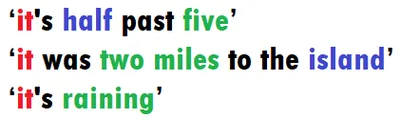
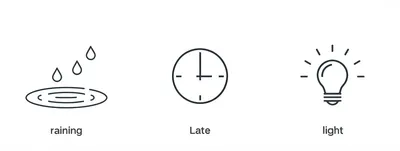
pronoun🔗Share그것The impersonal pronoun, used without referent as the subject of an impersonal verb or statement. (known as the dummy pronoun or weather it)"It is nearly 10 o’clock."거의 10시입니다.grammarlanguagelinguisticsessentialChat with AIVocabulary GamePractice Reading
pronoun🔗Share그것The impersonal pronoun, used without referent in various short idioms."It's raining cats and dogs outside. "밖에는 비가 억수같이 쏟아지고 있어요.grammarlanguageessentialChat with AIVocabulary GamePractice Reading
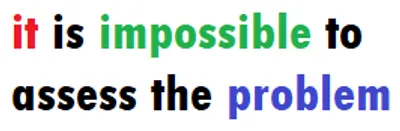
pronoun🔗Share그것The impersonal pronoun, used as a placeholder for a delayed subject, or less commonly, object; known as the dummy pronoun or, more formally in linguistics, a syntactic expletive. The delayed subject is commonly a to-infinitive, a gerund, or a noun clause introduced by a ."He saw to it that everyone would vote for him. (with the noun clause introduced by that)"그는 모든 사람이 그에게 투표하도록 했다.grammarlinguisticslanguageessentialChat with AIVocabulary GamePractice Reading
pronoun🔗Share끝, 마지막All or the end; something after which there is no more."Are there more students in this class, or is this it?"이 반에 더 많은 학생들이 있나요, 아니면 이게 끝인가요?timeoutcomeessentialChat with AIVocabulary GamePractice Reading
pronoun🔗Share그것A third-person singular personal pronoun used to refer to an animate referent who is transgender or is neither female nor male."My friend, who is transgender, said it was a difficult day at school. "성전환자인 내 친구는 학교에서 힘든 날이었다고 말했다.languagelinguisticsgrammarpersonculturesocietyessentialChat with AIVocabulary GamePractice Reading
pronoun🔗Share그것, 그것은Followed by an omitted and understood relative pronoun: That which; what."The new math problem was difficult; it stumped everyone in the class. "새로운 수학 문제는 어려웠고, 그것은 반의 모든 사람을 당황하게 만들었다.languagegrammaressentialChat with AIVocabulary GamePractice Reading
proper noun🔗Share이탈리아A large peninsula in Southern Europe protruding into the Mediterranean Sea and shaped like a boot. The mountain range of Apennines runs across it from north to south. Occupied almost entirely by Italy."My geography teacher said Italy's boot shape is called "the Italian Peninsula," and it is a very large peninsula in Southern Europe. "내 지리 선생님은 이탈리아의 부츠 모양을 "이탈리아 반도"라고 부르며, 남유럽에 있는 매우 큰 반도라고 말했습니다.geographynationplaceworldcontinentessentialChat with AIVocabulary GamePractice Reading
proper noun🔗Share이탈리아A country in southern Europe. Official name: Italian Republic."My cousin is studying in Italy. "내 사촌은 이탈리아에서 공부하고 있습니다.nationgeographyplaceessentialChat with AIVocabulary GamePractice Reading
proper noun🔗Share이탈리아어Abbreviation of Italian. (language)"My Italian grandmother speaks fluent Italian, but I only know a few basic words like "buongiorno" and "grazie." "나의 이탈리아 할머니는 유창한 이탈리아어를 구사하지만, 나는 "부온조르노"와 "그라찌에"와 같은 몇 가지 기본적인 단어만 알고 있습니다.languageessentialChat with AIVocabulary GamePractice Reading