
noun🔗Share敵, 敵役An opponent or enemy."The school bully was the antagonist in many students' lives. "学校のいじめっ子は、多くの生徒の人生における敵役でした。storycharacterpersonliteratureChat with AIVocabulary GamePractice Reading
noun🔗Share敵対者, 敵One who antagonizes or stirs."The school's new principal was the antagonist in the teachers' union's negotiations. "学校の新しい校長は、教員組合の交渉における敵対者だった。characterpersonstoryChat with AIVocabulary GamePractice Reading
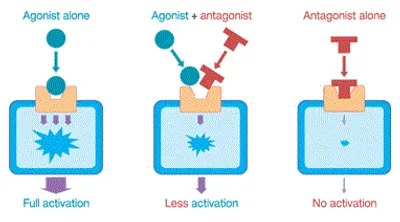
noun🔗Share拮抗薬A chemical that binds to a receptor but does not produce a physiological response, blocking the action of agonist chemicals."2001: The calcium antagonists represent one of the top ten classes of prescription drugs in terms of commercial value, with worldwide sales of nearly $10 billion in 1999. — Leslie Iversen, Drugs: A Very Short Introduction (Oxford 2001, p. 41)"2001年:カルシウム拮抗薬は、商業的価値の点で処方薬のトップ10クラスの1つであり、1999年には世界中で約100億ドルの売上を記録しました。— レスリー・イバーセン、Drugs: A Very Short Introduction (オックスフォード 2001, p. 41)medicinebiochemistryphysiologybiologysciencecompoundChat with AIVocabulary GamePractice Reading
noun🔗Share敵役, 敵対者(authorship) The main character or force opposing the protagonist in a literary work or drama."In the school play, the antagonist was the jealous classmate who tried to sabotage the protagonist's project. "学芸会では、敵役は主人公のプロジェクトを妨害しようとした嫉妬深いクラスメートでした。literaturecharacterstoryChat with AIVocabulary GamePractice Reading
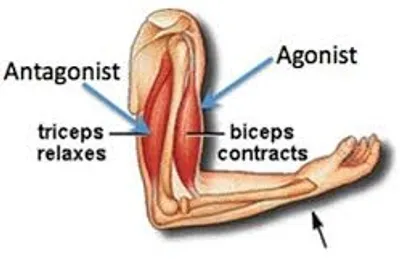
noun🔗Share拮抗筋A muscle that acts in opposition to another."A flexor, which bends a part, is the antagonist of an extensor, which extends it."ある部分を曲げる屈筋は、それを伸ばす伸筋の拮抗筋です。physiologyanatomybodyChat with AIVocabulary GamePractice Reading