
noun🔗Share적대자, 적An opponent or enemy."The school bully was the antagonist in many students' lives. "학교 폭력배는 많은 학생들의 삶에서 적대자였다.storycharacterpersonliteratureChat with AIVocabulary GamePractice Reading
noun🔗Share적대자, 반대자One who antagonizes or stirs."The school's new principal was the antagonist in the teachers' union's negotiations. "학교의 새 교장은 교사 노조의 협상에서 적대자였다.characterpersonstoryChat with AIVocabulary GamePractice Reading
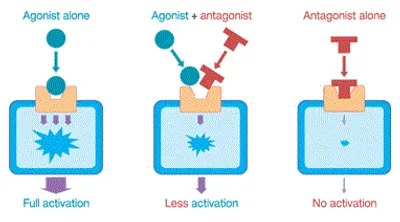
noun🔗Share길항제A chemical that binds to a receptor but does not produce a physiological response, blocking the action of agonist chemicals."2001: The calcium antagonists represent one of the top ten classes of prescription drugs in terms of commercial value, with worldwide sales of nearly $10 billion in 1999. — Leslie Iversen, Drugs: A Very Short Introduction (Oxford 2001, p. 41)"2001: 칼슘 길항제는 상업적 가치 측면에서 처방약 상위 10개 클래스 중 하나이며, 1999년에는 전 세계적으로 약 100억 달러의 판매고를 올렸습니다. — 레슬리 이버슨, Drugs: A Very Short Introduction (옥스퍼드 2001, p. 41)medicinebiochemistryphysiologybiologysciencecompoundChat with AIVocabulary GamePractice Reading
noun🔗Share적대자, 반대자(authorship) The main character or force opposing the protagonist in a literary work or drama."In the school play, the antagonist was the jealous classmate who tried to sabotage the protagonist's project. "학교 연극에서 적대자는 주인공의 프로젝트를 방해하려 했던 질투심 많은 급우였다.literaturecharacterstoryChat with AIVocabulary GamePractice Reading
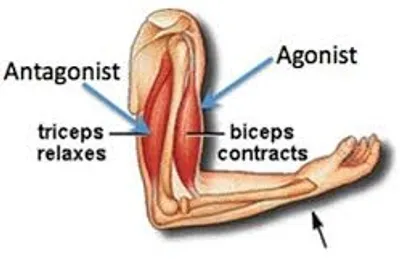
noun🔗Share길항근A muscle that acts in opposition to another."A flexor, which bends a part, is the antagonist of an extensor, which extends it."일부를 구부리는 굴근은 이를 펴는 신근의 길항근입니다.physiologyanatomybodyChat with AIVocabulary GamePractice Reading