
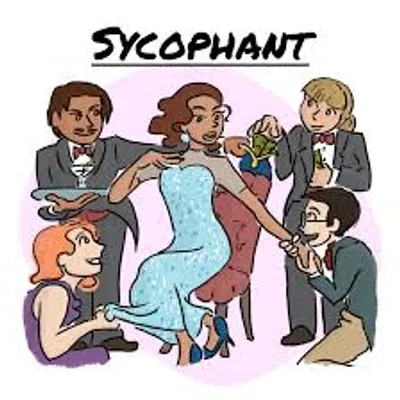




noun🔗Share아첨꾼, 알랑쇠One who uses obsequious compliments to gain self-serving favor or advantage from another; a servile flatterer."The sycophant in the office tried to win the boss's favor by showering him with exaggerated praise. "사무실의 아첨꾼은 과장된 칭찬으로 상사의 호감을 얻으려 했다.characterpersonattitudeorganizationsocietypoliticsgovernmenthumanmoralvalueChat with AIVocabulary GamePractice Reading
noun🔗Share아첨꾼, 알랑쇠One who seeks to gain through the powerful and influential."The sycophant constantly praised the teacher's every comment, hoping to get a better grade. "아첨꾼은 더 좋은 점수를 받기 위해 끊임없이 선생님의 모든 코멘트를 칭찬했다.characterpersonattitudesocietyChat with AIVocabulary GamePractice Reading
noun🔗Share아첨꾼, 고자질쟁이An informer; a talebearer."Maria was known as a sycophant in the office because she always reported her coworkers' mistakes to the boss. "마리아는 동료의 실수를 항상 상사에게 보고했기 때문에 사무실에서 아첨꾼으로 알려졌다.characterpersonattitudeChat with AIVocabulary GamePractice Reading
verb🔗Share비방하다, 중상하다To inform against; hence, to calumniate."The student sycophanted on his classmate, claiming he had cheated on the test, hoping to gain favor with the teacher. "그 학생은 시험에서 부정행위를 했다고 주장하며 급우를 비방하여 선생님의 호감을 얻으려 했다.characterattitudeactionwordChat with AIVocabulary GamePractice Reading
verb🔗Share아첨하다, 알랑거리다To play the sycophant toward; to flatter obsequiously.""To get a better grade, the student started to sycophant the teacher by excessively praising every lecture." "더 좋은 성적을 받기 위해, 그 학생은 모든 강의를 과도하게 칭찬하며 선생님에게 아첨하기 시작했다.characterattitudeactionsocietyhumanorganizationChat with AIVocabulary GamePractice Reading