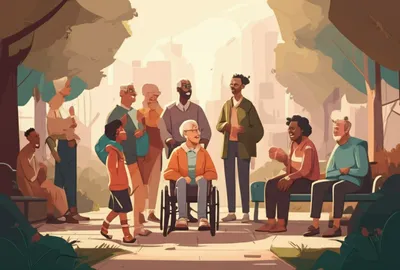





noun🔗Share다른 사람들An other, another (person, etc), more often rendered as another.""She helped me with my homework, and I helped others with theirs." "그녀는 내 숙제를 도와줬고, 나는 다른 사람들의 숙제를 도와줬다.personhumanbeinggroupChat with AIVocabulary GamePractice Reading
noun🔗Share다른 하나The other one; the second of two."One boat is not better than the other."한 배가 다른 배보다 더 낫지 않다.personbeingthingChat with AIVocabulary GamePractice Reading
verb🔗Share다른 사람으로 여기다, 소외시키다To regard, label or treat as an "other", as not part of the same group; to view as different and alien."The new manager othered the night shift workers by refusing to listen to their concerns or acknowledge their contributions. "새 관리자는 야간 근무자들의 우려를 경청하거나 그들의 기여를 인정하지 않음으로써 그들을 다른 사람으로 여겼다.politicsculturesocietyattitudehumangroupraceinhumanmoralChat with AIVocabulary GamePractice Reading
verb🔗Share다르게 취급하다, 따돌리다To treat as different or separate; segregate; ostracise."The new manager othered the employees who had worked at the company for a long time, excluding them from important meetings and decisions. "새 관리자는 오랫동안 회사에서 일해 온 직원들을 다르게 취급하여 중요한 회의와 결정에서 제외시켰다.societyattitudeinhumanmoralactiongrouppoliticsChat with AIVocabulary GamePractice Reading
noun🔗Share다른 사람들Other people."I treat others like I treat myself."나는 다른 사람들을 나 자신처럼 대한다.personhumansocietygroupChat with AIVocabulary GamePractice Reading
noun🔗Share다른 사람들Those remaining after one or more people or items have left, or done something else, or been excluded."Two decided to hide, the others surrendered. I kept two special jars and threw away all the others."두 명이 숨기로 결정했고, 다른 사람들은 항복했다. 나는 특별한 항아리 두 개를 보관하고 나머지는 모두 버렸다.persongroupthingChat with AIVocabulary GamePractice Reading