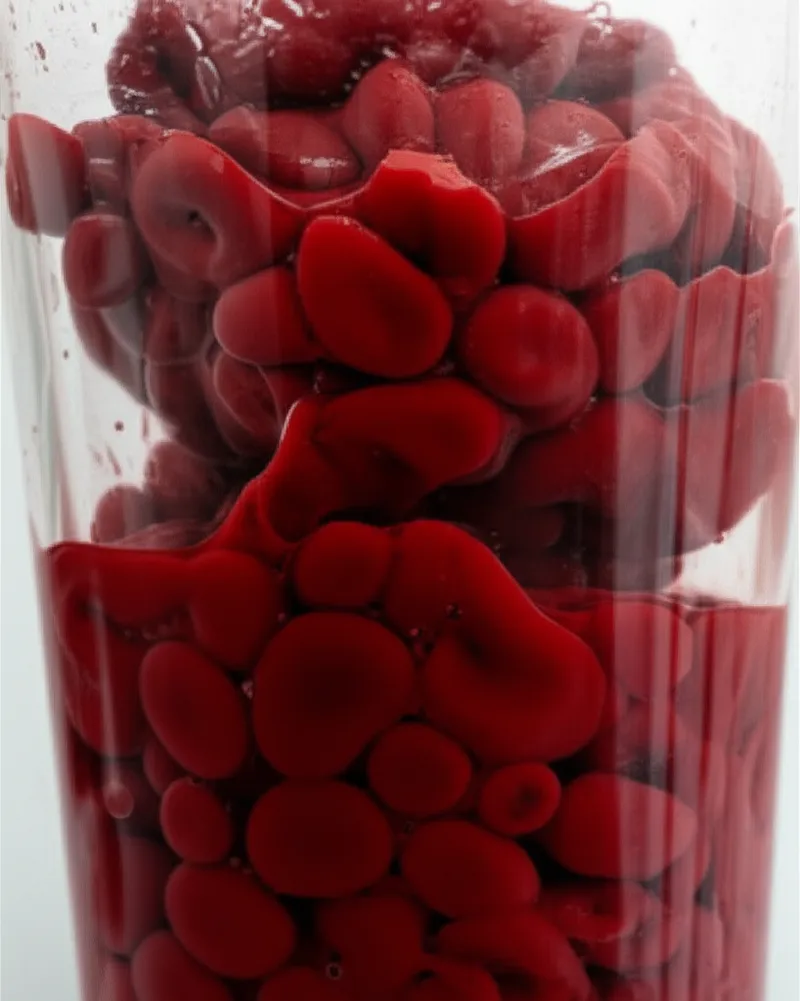
verb 다운로드 🔗공유 응고하다, 엉기다 To form a clot or mass. Examples : "The spilled tomato sauce clotted on the counter after sitting there for a while. " 엎질러진 토마토 소스는 잠시 동안 카운터에 놓여 있다가 응고되었다. medicine physiology body biology condition AI와 채팅어휘 게임독해 연습
verb 다운로드 🔗공유 응고시키다, 엉기다 To cause to clot or form into a mass. Examples : "The cold temperature clotted the spilled paint, making it difficult to clean. " 차가운 온도는 엎질러진 페인트를 응고시켜 청소하기 어렵게 만들었다. physiology medicine body biology AI와 채팅어휘 게임독해 연습
adjective 다운로드 🔗공유 응고된, 엉긴 Containing clots. Examples : "The nurse cleaned the wound, removing the clotted blood to apply a fresh bandage. " 간호사는 새 붕대를 붙이기 위해 응고된 피를 제거하고 상처를 소독했다. medicine body physiology condition AI와 채팅어휘 게임독해 연습
adjective 다운로드 🔗공유 응고된, 엉긴 Coagulated Examples : "The wound on his knee had clotted, forming a thick, dark scab. " 그의 무릎 상처는 응고되어 두껍고 어두운 딱지를 형성했다. medicine physiology body biology biochemistry AI와 채팅어휘 게임독해 연습