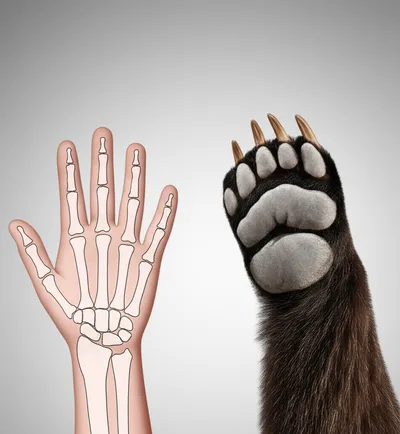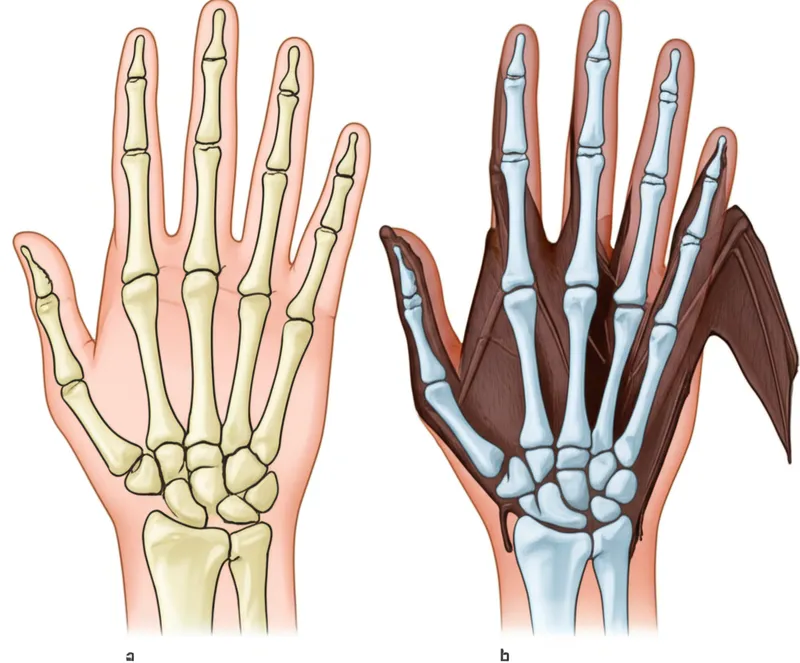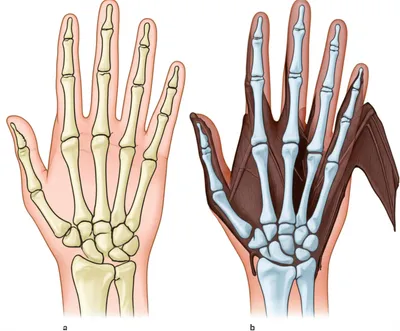

noun🔗Share相同物、相同器官または部分、化合物または染色体Something homologous; a homologous organ or part, chemical compound or a chromosome.""In our biology class, we learned that a bat's wing and a human arm are considered homologues because they share a similar bone structure inherited from a common ancestor." "生物の授業で、コウモリの翼と人間の腕は、共通の祖先から受け継いだ同様の骨格構造を共有しているため、相同物であると学びました。biologychemistryanatomyorganmedicinesciencebiochemistrystructurepartChat with AIVocabulary GamePractice Reading
noun🔗Share二つの言語または方言で共有される単語A word shared by two languages or dialects."Many English and French words are homologues, such as "hotel" and "hôtel," making it easier for English speakers to learn French vocabulary. "多くの英語とフランス語の単語は「hotel」や「hôtel」のような同系語であり、英語話者がフランス語の語彙を学ぶのを容易にしています。languagelinguisticswordChat with AIVocabulary GamePractice Reading
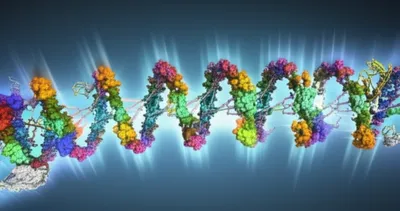
noun🔗Share相同物One of a group of similar DNA sequences that share a common ancestry."Because the two genes share significant sequence similarity and perform similar functions in different species, scientists believe they are homologues, descended from a common ancestral gene. "2つの遺伝子は有意な配列類似性を共有し、異なる種で同様の機能を実行するため、科学者たちはそれらが共通の祖先遺伝子から派生した相同物であると考えています。biologybiochemistryorganismgroupscienceChat with AIVocabulary GamePractice Reading
noun🔗Share同族体A member of a homologous series"Here are the first four alkanes in the homologous series: methane, ethane, propane, and butane. Thus, butane and propane are homologues. "メタン、エタン、プロパン、ブタンは、同族体系列の最初の4つのアルカンです。したがって、ブタンとプロパンは同族体です。chemistrycompoundsubstanceChat with AIVocabulary GamePractice Reading