

noun🔗Share명반An astringent salt, usually occurring in the form of pale crystals, much used in the dyeing and tanning trade and in certain medicines, and now understood to be a double sulphate of potassium and aluminium (K2SO4·Al2(SO4)3·24H2O)."The potter used alum to help set the dye and make the colors brighter on the clay pots. "도공은 찰흙 냄비의 색상을 더 밝게 하고 염료를 고정하기 위해 명반을 사용했다.compoundsubstancechemistrymaterialmedicineindustryscienceChat with AIVocabulary GamePractice Reading
noun🔗Share명반Any similar double sulphate in which either or both of the potassium and aluminium is wholly or partly replaced by other univalent or tervalent cations."The chemistry student identified the unknown crystal as an alum, noting its composition included sulfate and a mix of aluminum and potassium ions, characteristic of this class of double salts. "화학 학생은 미지의 결정을 명반으로 식별하고, 그 조성이 황산염과 알루미늄 및 칼륨 이온의 혼합물을 포함하며, 이는 이 종류의 이중 염의 특징임을 언급했다.compoundsubstancechemistrymaterialscienceChat with AIVocabulary GamePractice Reading
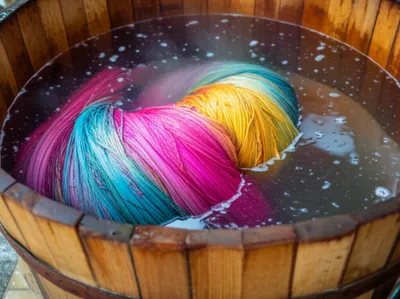
verb🔗Share명반 용액에 담그다, 명반으로 처리하다To steep in, or otherwise impregnate with, a solution of alum; to treat with alum."To strengthen the fabric, the seamstress alummed the delicate silk. "천을 강화하기 위해, 재봉사는 섬세한 실크를 명반으로 처리했다.chemistrysubstancematerialprocessChat with AIVocabulary GamePractice Reading
noun🔗Share졸업생, 동문(shortening) A past attendee or graduate (of either gender) of a college, university or other educational institution.""My father is an alum of Harvard University, graduating in 1985." "우리 아버지는 1985년에 졸업한 하버드 대학교 동문입니다.personeducationgrouporganizationpastachievementChat with AIVocabulary GamePractice Reading