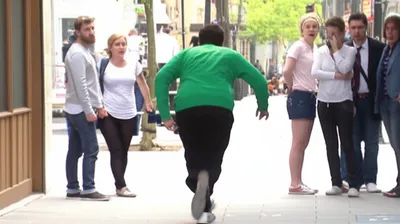
noun 다운로드 🔗공유 어색한 사람 Someone or something that is awkward. Examples : "The awkward at the party kept bumping into people and spilling his drink. " 파티에서 어색한 사람은 계속 사람들과 부딪히고 음료를 쏟았다. character person attitude toeic AI와 채팅어휘 게임독해 연습
adjective 다운로드 🔗공유 서투른, 어색한 Lacking dexterity in the use of the hands, or of instruments. Examples : "The young boy was awkward at tying his shoelaces, fumbling with the knots. " 어린 소년은 신발끈을 묶는 데 서툴렀고, 매듭을 만지작거렸다. ability human condition toeic AI와 채팅어휘 게임독해 연습
adjective 다운로드 🔗공유 어색한, 난처한 Not easily managed or effected; embarrassing. Examples : "An awkward silence had fallen." 어색한 침묵이 흘렀다. character attitude situation condition toeic AI와 채팅어휘 게임독해 연습
adjective 다운로드 🔗공유 어색한, 서투른 Lacking social skills, or uncomfortable with social interaction. Examples : "The new student felt awkward at his first school dance, unsure of how to talk to others. " 새로운 학생은 다른 사람들과 어떻게 대화해야 할지 몰라 첫 학교 댄스 파티에서 어색함을 느꼈다. character attitude emotion human mind society toeic AI와 채팅어휘 게임독해 연습
adjective 다운로드 🔗공유 어색한, 다루기 힘든, 곤란한 Perverse; adverse; difficult to handle. Examples : "The heavy box was in an awkward position, making it difficult to lift. " 무거운 상자는 어색한 위치에 있어서 들어올리기가 어려웠다. attitude character situation toeic AI와 채팅어휘 게임독해 연습
adverb 다운로드 🔗공유 뒤로 In a backwards direction. Examples : "The train moved awkwardly backward into the station. " 기차가 어색하게 뒤로 역 안으로 들어갔다. direction way toeic AI와 채팅어휘 게임독해 연습