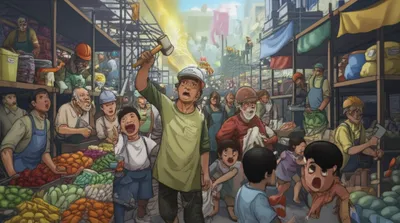
noun 다운로드 🔗공유 아우성, 소란 A great outcry or vociferation; loud and continued shouting or exclamation. Examples : "The clamor from the children at the playground made it hard to hear my phone conversation. " 운동장의 아이들 소란 때문에 전화 통화 내용을 듣기 어려웠다. sound communication exclamation group action society AI와 채팅어휘 게임독해 연습
noun 다운로드 🔗공유 소란, 아우성 Any loud and continued noise. Examples : "The clamor of children's laughter filled the school playground. " 아이들의 웃음소리가 학교 운동장을 가득 채웠다. sound communication action AI와 채팅어휘 게임독해 연습
noun 다운로드 🔗공유 아우성, 시위, 외침 A continued public expression, often of dissatisfaction or discontent; a popular outcry. Examples : "The students' clamor for a shorter school day grew louder each week. " 학생들의 짧은 등교 시간에 대한 아우성은 매주 더 커졌다. politics society government communication action demand media AI와 채팅어휘 게임독해 연습
verb 다운로드 🔗공유 외치다, 요구하다 To cry out and/or demand. Examples : "Anyone who tastes our food seems to clamor for more." 우리 음식을 맛본 사람은 더 많은 것을 요구하는 것 같다. communication demand society politics action government group sound AI와 채팅어휘 게임독해 연습
verb 다운로드 🔗공유 외치다, 큰 소리로 요구하다 To demand by outcry. Examples : "The students began to clamor for recess when the bell didn't ring on time. " 종이 제 시간에 울리지 않자 학생들이 쉬는 시간을 큰 소리로 요구하기 시작했다. demand communication action sound group politics government AI와 채팅어휘 게임독해 연습
verb 다운로드 🔗공유 떠들다, 아우성치다 To become noisy insistently. Examples : "After a confused murmur the audience soon clamored" 혼란스러운 웅성거림이 있은 후, 관객들은 곧 떠들었다. sound action communication group AI와 채팅어휘 게임독해 연습
verb 다운로드 🔗공유 외침으로 영향을 미치다 To influence by outcry. Examples : "His many supporters successfully clamor his election without a formal vote" 그의 많은 지지자들은 공식 투표 없이 외침으로 그의 선거에 성공적으로 영향을 미쳤다. communication politics society action government AI와 채팅어휘 게임독해 연습
verb 다운로드 🔗공유 침묵시키다 To silence. Examples : "The teacher's loud voice clamored the students' chatter into silence. " 선생님의 큰 목소리는 학생들의 수다를 침묵시켰다. sound action communication AI와 채팅어휘 게임독해 연습