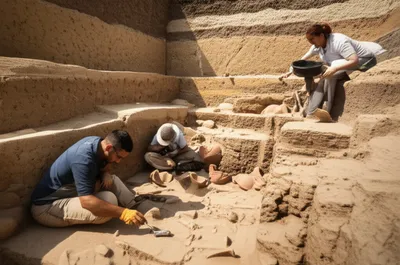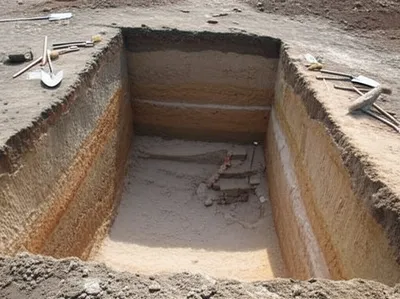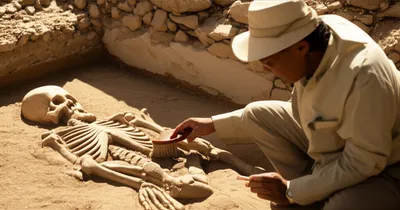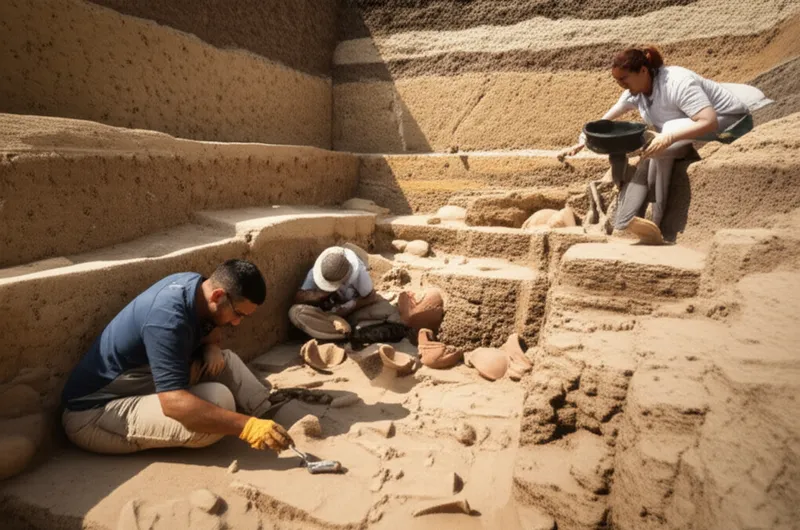

noun🔗Share발굴, 굴착The act of excavating, or of making hollow, by cutting, scooping, or digging out a part of a solid mass.""The archeologists' excavations revealed ancient pottery and tools buried deep underground." "고고학자들의 발굴은 땅속 깊이 묻혀 있던 고대 도자기와 도구를 드러냈다.archaeologygeologyhistoryactionChat with AIVocabulary GamePractice Reading
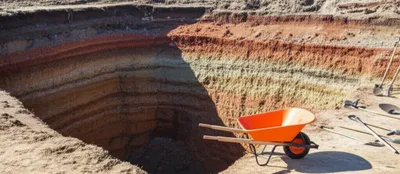
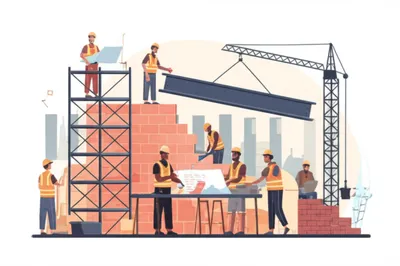
noun🔗Share굴착, 발굴A cavity formed by cutting, digging, or scooping."Construction workers made large excavations to lay the foundation for the new building. "건설 노동자들은 새 건물의 기초를 놓기 위해 대규모 굴착 작업을 했습니다.archaeologygeologybuildinghistoryChat with AIVocabulary GamePractice Reading
noun🔗Share발굴, 굴착An uncovered cutting in the earth, in distinction from a covered cutting or tunnel."Construction workers made large excavations to prepare the ground for the new building's foundation. "건설 노동자들은 새 건물의 기초를 다지기 위해 대규모 굴착 작업을 했습니다.archaeologygeologyhistoryenvironmentbuildingChat with AIVocabulary GamePractice Reading
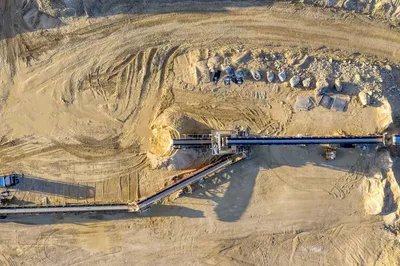
noun🔗Share굴착물, 굴토The material dug out in making a channel or cavity."The construction workers removed the excavations from the large hole they dug for the building's foundation. "건설 노동자들은 건물의 기초를 위해 파낸 큰 구멍에서 굴착물을 제거했습니다.archaeologygeologyhistoryenvironmentChat with AIVocabulary GamePractice Reading
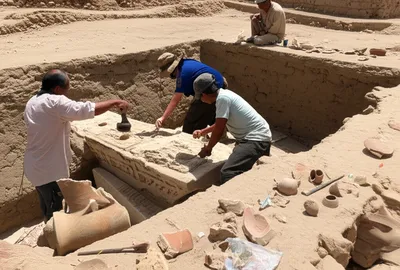
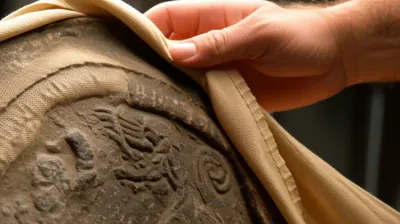
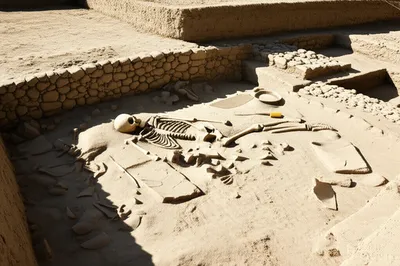
noun🔗Share발굴, 굴착Archaeological research that unearths buildings, tombs and objects of historical value."The excavations at the ancient Roman city revealed well-preserved houses and tools. "고대 로마 도시의 발굴을 통해 잘 보존된 집과 도구들이 드러났다.archaeologyhistorybuildingChat with AIVocabulary GamePractice Reading
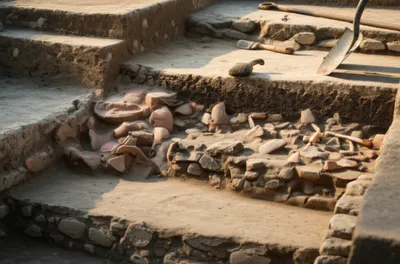
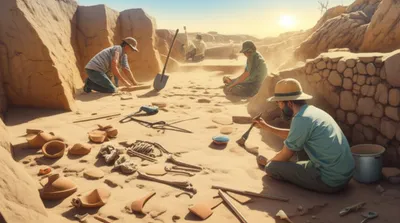
noun🔗Share발굴 현장A site where an archaeological exploration is being carried out."The excavations near the old city walls revealed pottery fragments and ancient tools. "오래된 도시 성벽 근처의 발굴 현장에서 도자기 조각과 고대 도구가 발견되었다.archaeologyhistorygeologyplaceChat with AIVocabulary GamePractice Reading