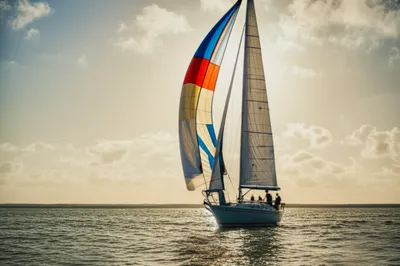
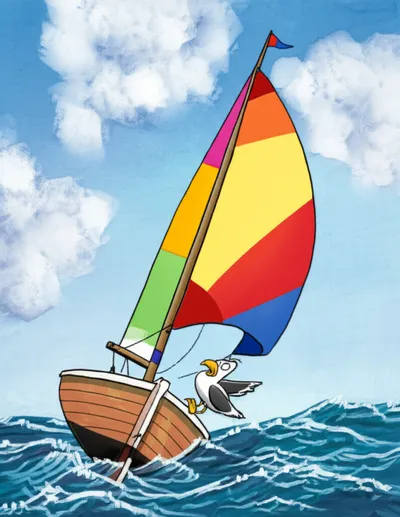
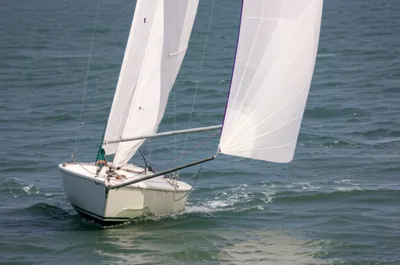
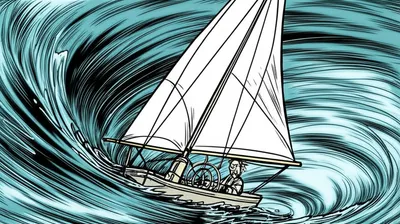
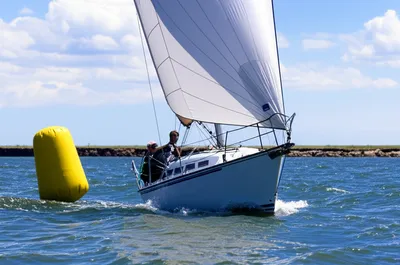
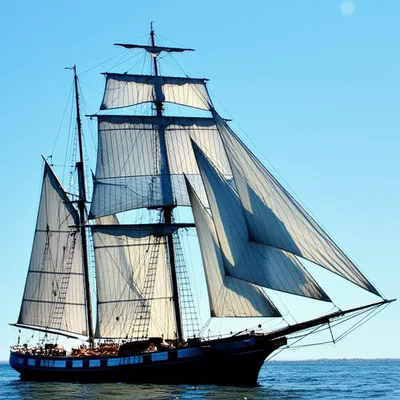
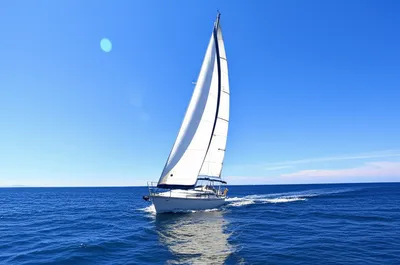
verb 下载 🔗分享 抢风转向,顺风转向。 To shift a fore-and-aft sail from one side of a sailing vessel to the other, while sailing before the wind. Examples : "As the wind shifted, the sailor gybed the mainsail to keep the boat moving downwind. " 随着风向改变,水手顺风转向了主帆,以保持船只顺风航行。 nautical sailing vehicle 与AI对话词汇游戏阅读练习
verb 下载 🔗分享 荡(帆),扯(帆)。 Of a fore-and-aft sail or its boom: to shift, often forcefully and suddenly, from one side of a sailing vessel to the other. Examples : "The sailboat gybed suddenly in the strong wind, causing the boom to swing across the deck. " 强风中,帆船突然荡帆,导致帆桁猛烈地从甲板的一侧甩到另一侧。 nautical sailing sport technical 与AI对话词汇游戏阅读练习
verb 下载 🔗分享 抢风转向,顺风转向。 Generally of a small sailing vessel: to change tack with the wind crossing behind the vessel. Examples : "The small sailboat gybed to avoid hitting the buoy, swinging its boom across the water. " 小帆船为了避免撞到浮标,抢风转向,船帆的横杆猛地从水面上甩了过去。 nautical sailing vehicle sport 与AI对话词汇游戏阅读练习
verb 下载 🔗分享 犹豫,退缩,动摇不定 (by extension) Often as gybe at: to balk, hesitate, or vacillate when faced with a course of action, plan, or proposal. Examples : ""He initially agreed to lead the project, but then gybed at the last minute when he realized the workload." " 他一开始同意领导这个项目,但当他意识到工作量时,最后一刻却退缩了。 attitude action plan nautical sailing 与AI对话词汇游戏阅读练习
verb 下载 🔗分享 抢风转向,顺风转向 Alternative spelling of jibe Examples : "The sailboat gybed to catch the wind on the other side of the lake. " 帆船抢风转向,以便能从湖的另一边借到风力。 nautical sailing 与AI对话词汇游戏阅读练习