noun 다운로드 🔗공유 별난 사람, 이상한 것 An odd, puzzling or absurd person or thing. Examples : "My uncle is a real quiz—he always says the most unexpected things. " 내 삼촌은 정말 별난 사람이야—그는 항상 가장 예상치 못한 말을 해. person character thing AI와 채팅어휘 게임독해 연습
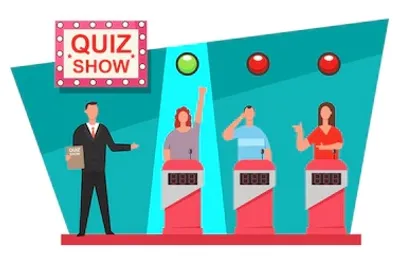
noun 다운로드 🔗공유 퀴즈, 퀴즈 대회 A competition in the answering of questions. Examples : "We came second in the pub quiz." 우리는 펍 퀴즈에서 2등을 했다. entertainment education game AI와 채팅어휘 게임독해 연습
noun 다운로드 🔗공유 퀴즈, 짤막한 시험 A school examination of less importance, or of greater brevity, than others given in the same course. Examples : "The history quiz was shorter than the final exam, but still important for our grade. " 역사 퀴즈는 기말고사보다 짧았지만, 우리 성적에는 여전히 중요했다. education AI와 채팅어휘 게임독해 연습
verb 다운로드 🔗공유 놀리다, 조롱하다 To hoax; to chaff or mock with pretended seriousness of discourse; to make sport of, as by obscure questions. Examples : "The teacher quizzed the students with obscure questions about ancient history, just to make them seem confused. " 선생님은 학생들을 혼란스럽게 보이게 하려고 고대 역사에 대한 모호한 질문으로 놀렸다. entertainment communication language word AI와 채팅어휘 게임독해 연습
verb 다운로드 🔗공유 뚫어지게 쳐다보다, 쏘아보다 To peer at; to eye suspiciously or mockingly. Examples : "The teacher quizzed the student, trying to figure out if she had cheated on the test. " 선생님은 시험에서 부정행위를 했는지 알아내려고 학생을 뚫어지게 쳐다봤다. attitude human character AI와 채팅어휘 게임독해 연습
verb 다운로드 🔗공유 질문하다, 심문하다 To question closely, to interrogate. Examples : "The teacher quizzed the students about the history of the Roman Empire. " 선생님은 학생들에게 로마 제국의 역사에 대해 질문했다. communication language education AI와 채팅어휘 게임독해 연습
verb 다운로드 🔗공유 퀴즈를 내다, 시험하다 To instruct by means of a quiz. Examples : "The teacher quizzed the students on the history of the Roman Empire. " 선생님은 학생들에게 로마 제국의 역사에 대해 퀴즈를 냈다. education communication AI와 채팅어휘 게임독해 연습
verb 다운로드 🔗공유 퀴즈를 내다, 시험하다 To play with a quiz. Examples : "The students quizzed each other on the history of the Roman Empire. " 학생들은 서로 로마 제국의 역사에 대해 퀴즈를 냈다. entertainment game education AI와 채팅어휘 게임독해 연습