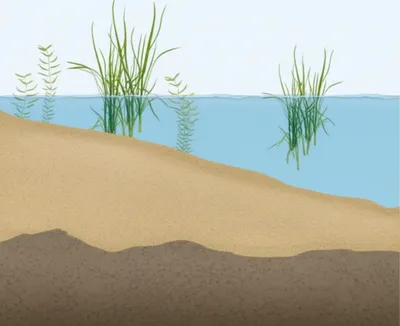
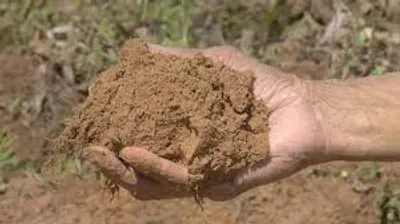
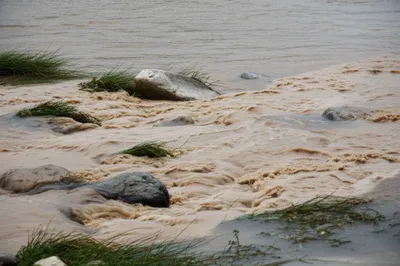
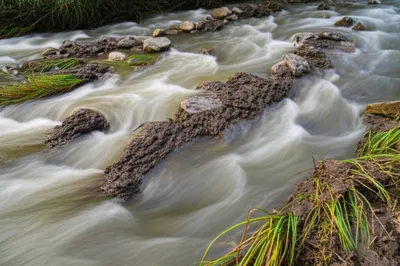
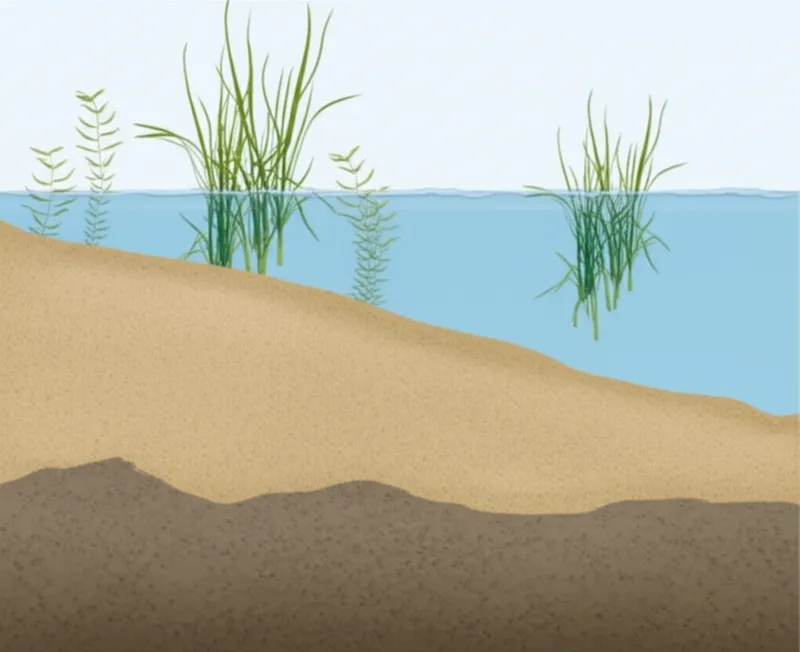
noun 다운로드 🔗공유 미사, 실트 Mud or fine earth deposited from running or standing water. Examples : "The river left a thick layer of silt on the farmer's field after the flood. " 홍수 후 강은 농부의 밭에 두꺼운 층의 미사를 남겼다. geology environment nature material AI와 채팅어휘 게임독해 연습
noun 다운로드 🔗공유 미사 (by extension) Material with similar physical characteristics, whatever its origins or transport. Examples : "The construction site was covered in a thick layer of silt, which was a mix of sand, clay, and tiny rocks, making it difficult to work. " 공사 현장은 모래, 점토, 작은 돌이 섞인 두꺼운 미사층으로 덮여 있어 작업이 어려웠다. geology material environment AI와 채팅어휘 게임독해 연습
noun 다운로드 🔗공유 미사 A particle from 3.9 to 62.5 microns in diameter, following the Wentworth scale. Examples : "The river's current carried silt from the fields into the pond. " 강의 흐름은 밭에서 미사를 연못으로 운반했다. geology environment material science AI와 채팅어휘 게임독해 연습
verb 다운로드 🔗공유 침전시키다, 펄로 채우다 To clog or fill with silt. Examples : "After the heavy rain, the drain began to silt up, causing the water to overflow. " 폭우가 내린 후, 배수구가 펄로 채워지기 시작하여 물이 넘쳤다. environment geology AI와 채팅어휘 게임독해 연습
verb 다운로드 🔗공유 모래로 막히다 To become clogged with silt. Examples : "After the heavy rain, the small stream began to silt, making it shallower each day. " 폭우가 내린 후, 작은 시내는 모래로 막히기 시작하여 날마다 얕아졌다. environment geology AI와 채팅어휘 게임독해 연습
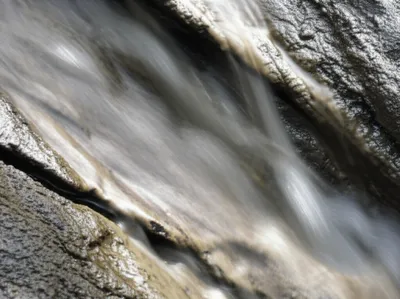
verb 다운로드 🔗공유 스며들다, 침투하다 To flow through crevices; to percolate. Examples : "The rainwater slowly silted through the cracks in the patio, leaving a muddy stain. " 빗물은 파티오의 갈라진 틈새로 천천히 스며들어 진흙 얼룩을 남겼다. geology environment nature AI와 채팅어휘 게임독해 연습