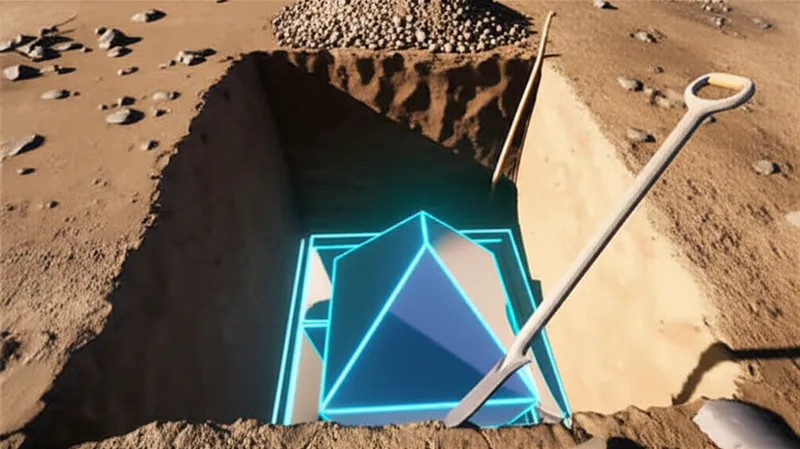

noun🔗Share굴착, 발굴The act of excavating, or of making hollow, by cutting, scooping, or digging out a part of a solid mass."The excavation of the backyard revealed a buried treasure chest. "뒷마당 발굴 작업에서 묻혀 있던 보물 상자가 발견되었다.archaeologygeologybuildingactionhistoryenvironmentprocessChat with AIVocabulary GamePractice Reading
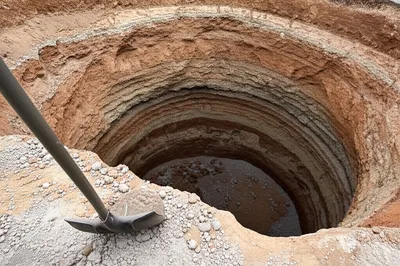
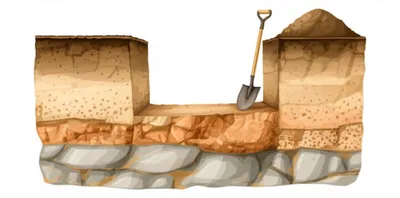
noun🔗Share굴착, 발굴A cavity formed by cutting, digging, or scooping."The excavation in the garden was too deep; the children could see the roots of the old oak tree. "정원의 굴착이 너무 깊어서 아이들은 오래된 참나무의 뿌리를 볼 수 있었다.archaeologygeologybuildingarchitectureenvironmentChat with AIVocabulary GamePractice Reading
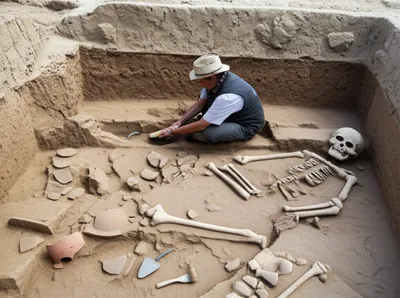
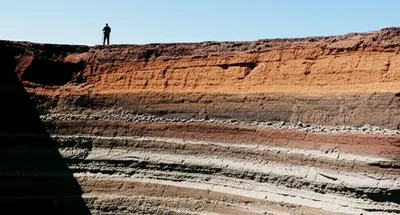
noun🔗Share굴착, 발굴An uncovered cutting in the earth, in distinction from a covered cutting or tunnel."The archaeological excavation revealed ancient pottery buried beneath the surface of the field. "고고학적 발굴은 밭 표면 아래 묻혀 있던 고대 도자기를 드러냈다.archaeologygeologybuildingenvironmentChat with AIVocabulary GamePractice Reading
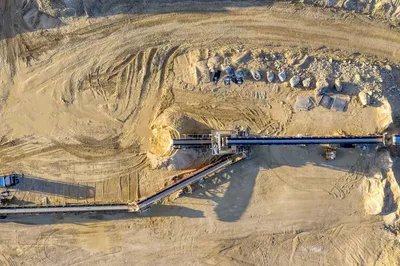
noun🔗Share굴착물, 흙The material dug out in making a channel or cavity."The pile of dirt near the construction site was the excavation from the new basement. "공사 현장 근처의 흙더미는 새 지하실에서 나온 굴착물이었다.archaeologygeologybuildingmaterialarchitectureChat with AIVocabulary GamePractice Reading
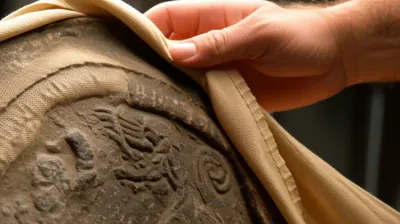
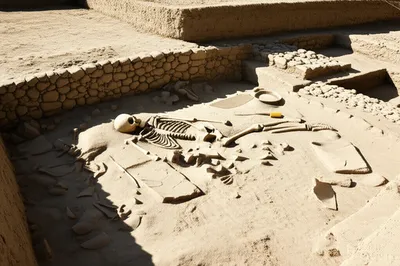
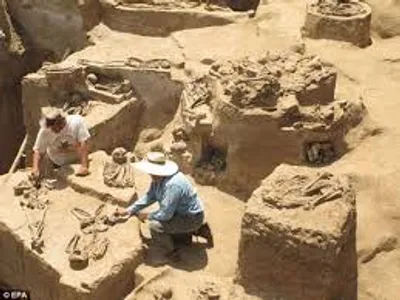
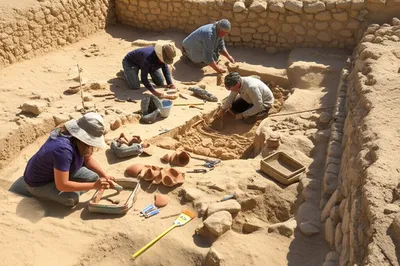
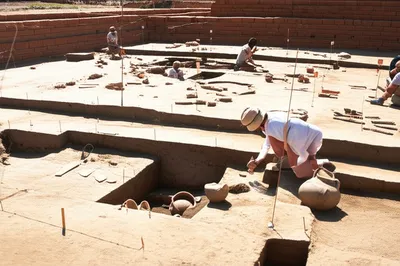
noun🔗Share발굴, 굴착Archaeological research that unearths buildings, tombs and objects of historical value."The excavation team discovered a well-preserved ancient tomb during their archaeological research. "발굴팀은 고고학 연구 중에 잘 보존된 고대 무덤을 발견했다.archaeologyhistoryChat with AIVocabulary GamePractice Reading
noun🔗Share발굴 현장A site where an archaeological exploration is being carried out."The archaeology students spent the summer at the excavation site, carefully unearthing ancient pottery shards. "고고학 학생들은 발굴 현장에서 여름을 보내며 고대 도자기 조각들을 조심스럽게 발굴했다.archaeologyareahistorygeologyChat with AIVocabulary GamePractice Reading