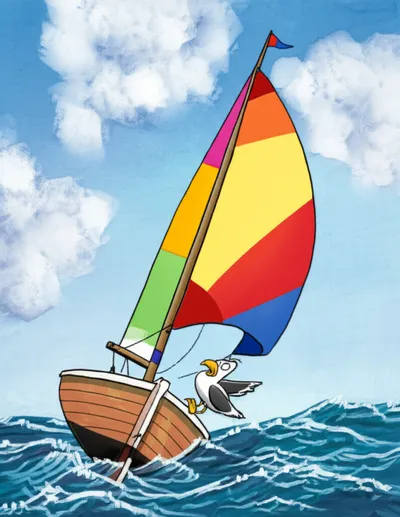
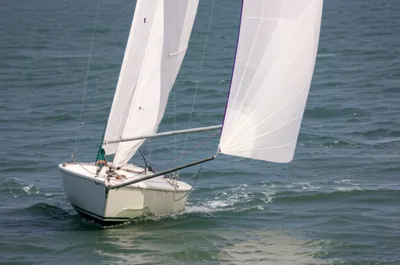
verb 다운로드 🔗공유 배의 돛을 반대쪽으로 돌리다 To shift a fore-and-aft sail from one side of a sailing vessel to the other, while sailing before the wind. Examples : "As the wind shifted, the sailor gybed the mainsail to keep the boat moving downwind. " 바람이 바뀌자, 뱃사람은 배가 순풍으로 움직이도록 메인 돛을 반대쪽으로 돌렸다. nautical sailing vehicle AI와 채팅어휘 게임독해 연습
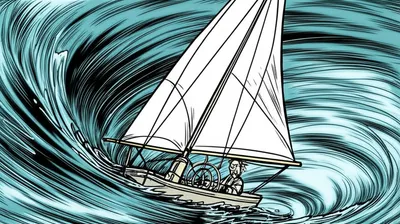
verb 다운로드 🔗공유 배의 붐을 돌리다 Of a fore-and-aft sail or its boom: to shift, often forcefully and suddenly, from one side of a sailing vessel to the other. Examples : "The sailboat gybed suddenly in the strong wind, causing the boom to swing across the deck. " 강한 바람에 요트가 갑자기 붐을 돌려 붐이 갑판을 가로질러 흔들렸다. nautical sailing sport technical AI와 채팅어휘 게임독해 연습
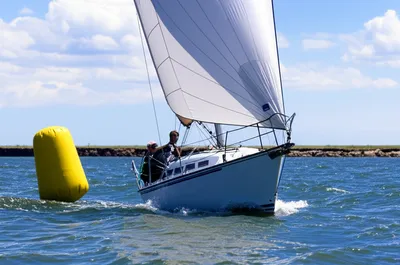
verb 다운로드 🔗공유 배의 방향을 바꾸다 Generally of a small sailing vessel: to change tack with the wind crossing behind the vessel. Examples : "The small sailboat gybed to avoid hitting the buoy, swinging its boom across the water. " 작은 범선은 부딪히는 것을 피하기 위해 배의 방향을 바꾸며 붐을 물 위로 흔들었다. nautical sailing vehicle sport AI와 채팅어휘 게임독해 연습
verb 다운로드 🔗공유 망설이다, 주저하다 (by extension) Often as gybe at: to balk, hesitate, or vacillate when faced with a course of action, plan, or proposal. Examples : ""He initially agreed to lead the project, but then gybed at the last minute when he realized the workload." " 그는 처음에는 프로젝트를 이끌기로 동의했지만, 작업량을 깨닫고 마지막 순간에 망설였다. attitude action plan nautical sailing AI와 채팅어휘 게임독해 연습
verb 다운로드 🔗공유 방향을 바꾸다 Alternative spelling of jibe Examples : "The sailboat gybed to catch the wind on the other side of the lake. " 요트가 호수 반대편에서 바람을 잡기 위해 방향을 바꿨다. nautical sailing AI와 채팅어휘 게임독해 연습