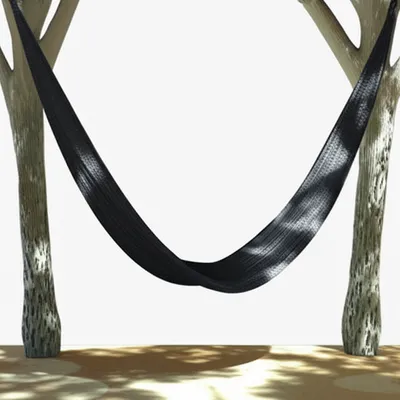
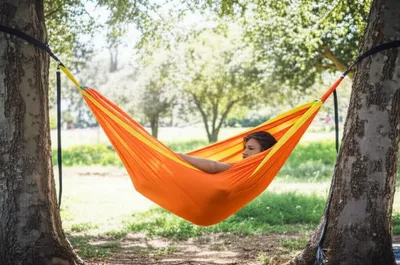
noun 다운로드 🔗공유 해먹 A swinging couch or bed, usually made of netting or canvas about six feet wide, suspended by clews or cords at the ends. Examples : "The children enjoyed swinging in the hammocks after their school play. " 아이들은 학교 연극 후에 해먹에서 그네를 타는 것을 즐겼다. item utensil wear building AI와 채팅어휘 게임독해 연습
noun 다운로드 🔗공유 빽빽한 숲이 우거진 땅 (obsolete outside dialectal) A piece of land thickly wooded, and usually covered with bushes and vines. Examples : "The old map marked the dense, overgrown areas near the river as "hammocks," warning travelers of the thick vegetation. " 오래된 지도는 강 근처의 빽빽하고 우거진 지역을 "빽빽한 숲이 우거진 땅"으로 표시하여 여행자들에게 짙은 식생을 경고했습니다. environment geography place nature AI와 채팅어휘 게임독해 연습
verb 다운로드 🔗공유 해먹에 눕다 To lie in a hammock. Examples : "We love to hammock in the backyard on warm summer afternoons. " 우리는 따뜻한 여름 오후에 뒷마당에서 해먹에 눕는 것을 좋아합니다. entertainment action AI와 채팅어휘 게임독해 연습
verb 다운로드 🔗공유 해먹처럼 걸다 (of a cloth) To hang in a way that resembles a hammock. Examples : "The loose fabric of her skirt hammocks between her knees as she sits on the park bench. " 그녀가 공원 벤치에 앉아 있을 때, 그녀의 치마의 헐렁한 천이 무릎 사이에 해먹처럼 걸려 있다. material appearance AI와 채팅어휘 게임독해 연습
verb 다운로드 🔗공유 해먹에 묶다, 해먹처럼 감싸다 To make something be wrapped tight, like in a hammock. Examples : "The tailor hammocked the fabric scraps, gathering and cinching them tightly before securing them with a knot to prevent unraveling. " 재단사는 천 조각을 해먹처럼 감싸서 모으고 꽉 조인 다음 매듭으로 고정하여 풀리는 것을 방지했다. action process AI와 채팅어휘 게임독해 연습