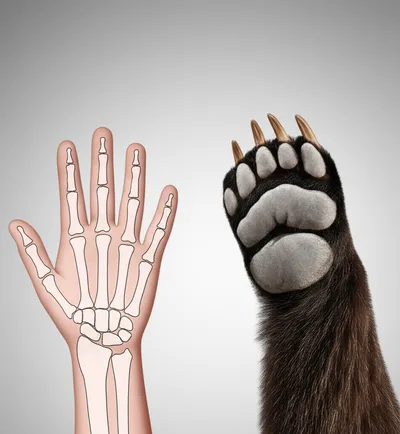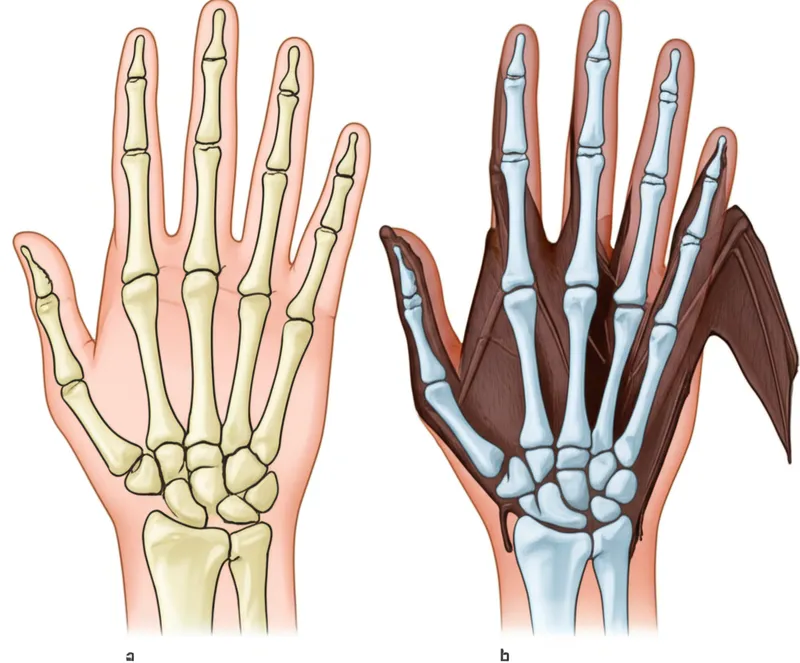

noun🔗Share상동물, 상동 기관 또는 부분, 화학 화합물 또는 염색체Something homologous; a homologous organ or part, chemical compound or a chromosome.""In our biology class, we learned that a bat's wing and a human arm are considered homologues because they share a similar bone structure inherited from a common ancestor." "생물학 수업에서 우리는 박쥐의 날개와 인간의 팔이 공통 조상으로부터 물려받은 유사한 뼈 구조를 공유하기 때문에 상동물로 간주된다는 것을 배웠습니다.biologychemistryanatomyorganmedicinesciencebiochemistrystructurepartChat with AIVocabulary GamePractice Reading
noun🔗Share두 언어 또는 방언에서 공유되는 단어A word shared by two languages or dialects."Many English and French words are homologues, such as "hotel" and "hôtel," making it easier for English speakers to learn French vocabulary. "많은 영어와 프랑스 단어는 "hotel"과 "hôtel"과 같은 동족어이며, 이는 영어 사용자가 프랑스어 어휘를 배우는 것을 더 쉽게 만듭니다.languagelinguisticswordChat with AIVocabulary GamePractice Reading
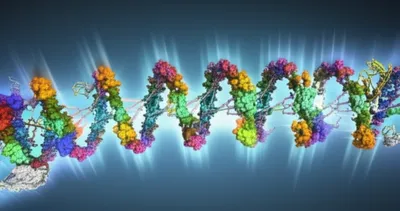
noun🔗Share상동체One of a group of similar DNA sequences that share a common ancestry."Because the two genes share significant sequence similarity and perform similar functions in different species, scientists believe they are homologues, descended from a common ancestral gene. "두 유전자가 상당한 서열 유사성을 공유하고 서로 다른 종에서 유사한 기능을 수행하기 때문에, 과학자들은 이들이 공통 조상 유전자에서 유래한 상동체라고 믿습니다.biologybiochemistryorganismgroupscienceChat with AIVocabulary GamePractice Reading
noun🔗Share상동체A member of a homologous series"Here are the first four alkanes in the homologous series: methane, ethane, propane, and butane. Thus, butane and propane are homologues. "다음은 상동 계열의 처음 4개의 알칸입니다: 메탄, 에탄, 프로판, 부탄. 따라서 부탄과 프로페인은 상동체입니다.chemistrycompoundsubstanceChat with AIVocabulary GamePractice Reading