


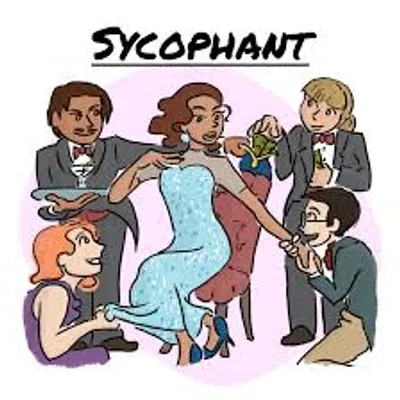



noun🔗ShareПодхалим, льстецOne who uses obsequious compliments to gain self-serving favor or advantage from another; a servile flatterer."The sycophant in the office tried to win the boss's favor by showering him with exaggerated praise. "Подхалим в офисе пытался завоевать расположение начальника, осыпая его преувеличенной похвалой.characterpersonattitudeorganizationsocietypoliticsgovernmenthumanmoralvalueChat with AIVocabulary GamePractice Reading
noun🔗ShareПодхалим, льстецOne who seeks to gain through the powerful and influential."The sycophant constantly praised the teacher's every comment, hoping to get a better grade. "Подхалим постоянно хвалил каждый комментарий учителя, надеясь получить оценку получше.characterpersonattitudesocietyChat with AIVocabulary GamePractice Reading
noun🔗ShareДоносчик, льстецAn informer; a talebearer."Maria was known as a sycophant in the office because she always reported her coworkers' mistakes to the boss. "Марию знали в офисе как доносчицу, потому что она всегда докладывала начальнику об ошибках своих коллег.characterpersonattitudeChat with AIVocabulary GamePractice Reading
verb🔗ShareДоносить, клеветатьTo inform against; hence, to calumniate."The student sycophanted on his classmate, claiming he had cheated on the test, hoping to gain favor with the teacher. "Студент донес на своего одноклассника, утверждая, что тот списал на тесте, надеясь заслужить расположение учителя.characterattitudeactionwordChat with AIVocabulary GamePractice Reading
verb🔗ShareПодхалимничать, льститьTo play the sycophant toward; to flatter obsequiously.""To get a better grade, the student started to sycophant the teacher by excessively praising every lecture." "Чтобы получить оценку получше, студент начал подхалимничать учителю, чрезмерно расхваливая каждую лекцию.characterattitudeactionsocietyhumanorganizationChat with AIVocabulary GamePractice Reading