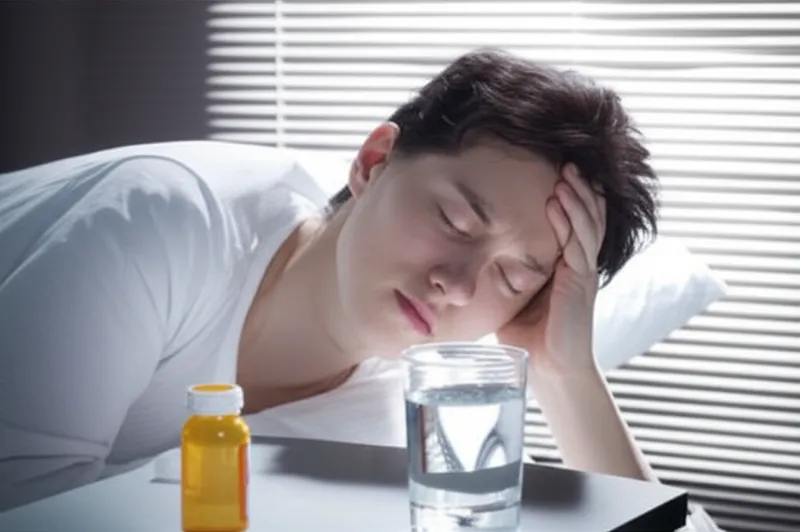
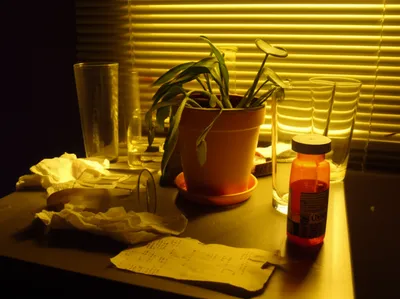
noun ダウンロード 🔗共有 二日酔い, 酔いの残り Negative effects, such as headache or nausea, caused by previous drunkenness due to (excessive) consumption of alcohol. Examples : "I really enjoyed yesterday’s party, but now I have the biggest hangover – I’ll not be doing that again any time soon." 昨日のパーティーは本当に楽しかったけど、今はひどい二日酔いで、しばらくはもうしないだろう。 medicine physiology condition body drink food sensation suffering AIとチャット語彙ゲーム読解練習
noun ダウンロード 🔗共有 二日酔い, 後遺症 Similar negative effects caused by previous excessive consumption of something else, such as a drug, coffee, sugar, etc. Examples : "After finishing the big project at work, I celebrated with tons of coffee, and now I have a caffeine hangover with a headache and the jitters. " 職場で大きなプロジェクトを終えた後、大量のコーヒーで祝いましたが、今は頭痛と震えを伴うカフェインの後遺症があります。 medicine body condition sensation suffering AIとチャット語彙ゲーム読解練習
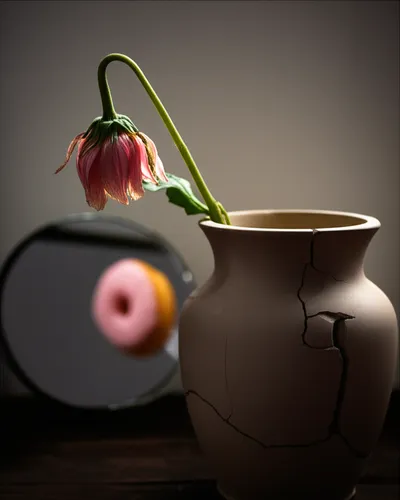
noun ダウンロード 🔗共有 後遺症, 影響 An unpleasant relic left from prior events. Examples : "The overdue library book was a constant hangover from my forgetful weekend. " 延滞した図書館の本は、私の忘れっぽい週末からの絶え間ない影響でした。 medicine body condition sensation drink AIとチャット語彙ゲーム読解練習
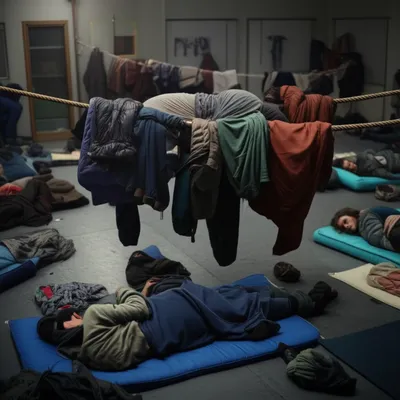
noun ダウンロード 🔗共有 寝場所、寝台 A sleeping arrangement, usually in homeless shelters, over a rope. Examples : "The homeless shelter offered a simple hangout for the night, a hammock-like structure called a "hangover" made of rope. " ホームレスシェルターは、ロープで作られた「寝場所」と呼ばれるハンモックのような構造で、一晩の簡単な寝場所を提供しました。 society condition human AIとチャット語彙ゲーム読解練習