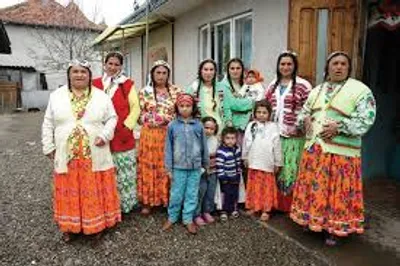
noun 다운로드 🔗공유 집시, 로마니 (sometimes offensive) A member of the Romani people, or one of the sub-groups (Roma, Sinti, Romanichal, etc). Examples : "My friend, a Gypsy, shared stories of their family's travels. " 내 친구, 집시는 가족의 여행 이야기를 공유했다. culture group race person society tradition history AI와 채팅어휘 게임독해 연습
adjective 다운로드 🔗공유 집시의 (sometimes offensive) Of or belonging to the Romani people or one of it sub-groups (Roma, Sinti, Romanichel, etc). Examples : "My friend's family has a long history of gypsy traditions. " 내 친구의 가족은 오랜 집시 전통을 가지고 있다. culture race person group history AI와 채팅어휘 게임독해 연습
noun 다운로드 🔗공유 집시, 방랑자 An itinerant person or any person, not necessarily Romani; a tinker, a traveller or a carny. Examples : "The local gypsy sold her wares at the school fair. " 그 지역 집시가 학교 축제에서 물건을 팔았다. person culture society history AI와 채팅어휘 게임독해 연습
noun 다운로드 🔗공유 집시 (때로는 모욕적) (sometimes offensive) A move in contra dancing in which two dancers walk in a circle around each other while maintaining eye contact (but not touching as in a swing). (Compare whole gyp, half gyp, and gypsy meltdown, in which this step precedes a swing.) Examples : "During the contra dance lesson, the instructor explained the "gypsy" and emphasized the importance of holding eye contact with your partner as you circle around each other. " 컨트라 댄스 수업 중에 강사는 "집시"를 설명하고 서로 원을 그리며 돌 때 파트너와 눈을 마주치는 것이 얼마나 중요한지 강조했습니다. dance entertainment AI와 채팅어휘 게임독해 연습
noun 다운로드 🔗공유 브로드웨이 뮤지컬 코러스 라인 멤버 A member of a Broadway musical chorus line. Examples : "After years of hard work, she finally landed a role as a gypsy in the new Broadway show. " 수년간의 노고 끝에, 그녀는 마침내 새로운 브로드웨이 쇼에서 브로드웨이 뮤지컬 코러스 라인 멤버 역할을 맡게 되었다. entertainment music stage job person AI와 채팅어휘 게임독해 연습
noun 다운로드 🔗공유 어두운 피부색을 가진 사람 A person with a dark complexion. Examples : "The new student, a young gypsy, sat in the back row, quietly observing the class. " 새로운 학생인 젊은 어두운 피부색을 가진 사람은 뒷줄에 앉아 조용히 수업을 지켜봤다. appearance person race AI와 채팅어휘 게임독해 연습
noun 다운로드 🔗공유 교활한 여자, 간교한 여자 A sly, roguish woman. Examples : "The gossip-loving gypsy at school spread rumors about the new student. " 학교에서 소문을 좋아하는 교활한 여자가 새 학생에 대한 소문을 퍼뜨렸다. character person style AI와 채팅어휘 게임독해 연습
verb 다운로드 🔗공유 떠돌아다니다, 유랑하다 To roam around the country like a gypsy. Examples : "The family decided to gypsy around the country, visiting different national parks on their summer vacation. " 가족은 여름 휴가에 다양한 국립 공원을 방문하며 전국을 떠돌아다니기로 결정했습니다. culture way AI와 채팅어휘 게임독해 연습
verb 다운로드 🔗공유 컨트라 댄스에서 집시 스텝을 하다 To perform the gypsy step in contra dancing. Examples : "At the contra dance, Sarah expertly gypped to the lively music. " 컨트라 댄스에서, 사라가 활기찬 음악에 맞춰 능숙하게 집시 스텝을 했다. dance action AI와 채팅어휘 게임독해 연습
adjective 다운로드 🔗공유 집시의, 유랑하는, 사기의 Of or having the qualities of an itinerant person or group with qualities traditionally ascribed to Romani people; making a living from dishonest practices or theft etc. Examples : "Because the street performer had a gypsy lifestyle, moving from town to town and relying on coin donations, it was difficult to predict where he'd be performing next. " 거리 공연자는 집시의 생활 방식을 가지고 있었기 때문에, 도시에서 도시로 이동하며 동전 기부에 의존했기 때문에, 그가 다음에 어디서 공연할지 예측하기 어려웠다. culture character person tradition society AI와 채팅어휘 게임독해 연습