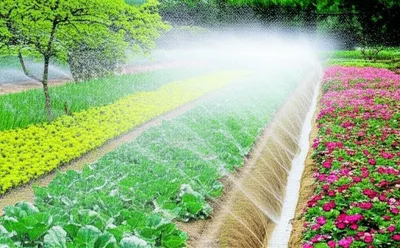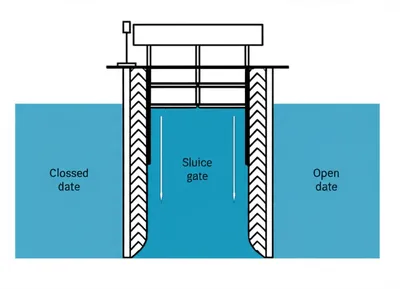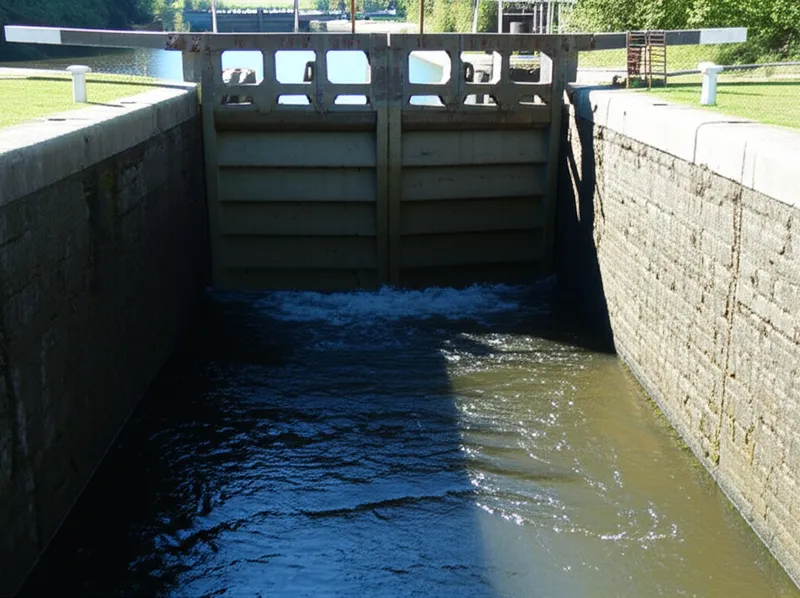
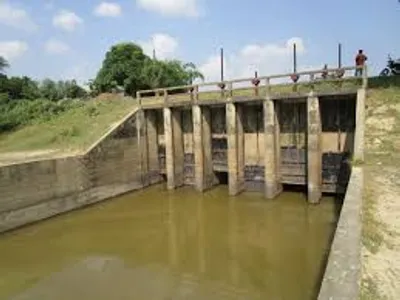

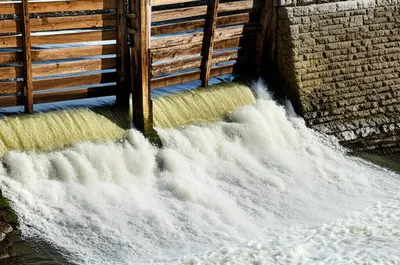



noun🔗Share수문An artificial passage for water, fitted with a valve or gate, for example in a canal lock or a mill stream, for stopping or regulating the flow."The farmer opened the sluice to release water from the irrigation canal onto his thirsty fields. "농부는 관개 수로에서 물을 그의 목마른 밭으로 내보내기 위해 수문을 열었다.utilityarchitecturetechnologyenvironmentmachinedeviceChat with AIVocabulary GamePractice Reading
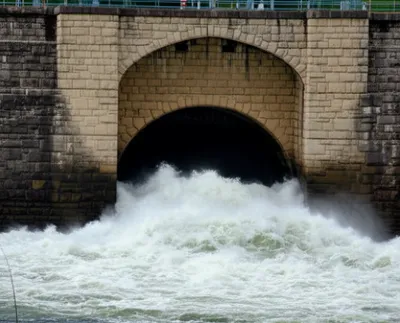
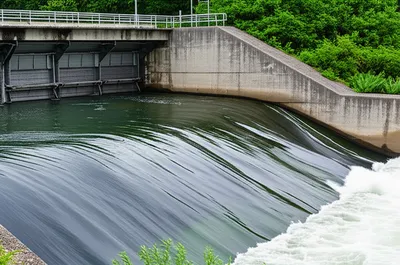
noun🔗Share수문, 갑문A water gate or floodgate."The farmer opened the sluice to release water from the reservoir and irrigate his fields. "농부는 저수지에서 물을 방류하여 밭에 물을 대기 위해 수문을 열었다.utilityarchitectureenvironmentagriculturenauticalbuildingChat with AIVocabulary GamePractice Reading
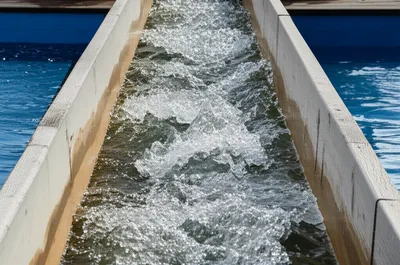
noun🔗Share수문, 물길Hence, an opening or channel through which anything flows; a source of supply."The kitchen sink's drain is a sluice for excess water. "주방 싱크대의 배수구는 과도한 물을 위한 수문입니다.utilitystructuretechnologyChat with AIVocabulary GamePractice Reading
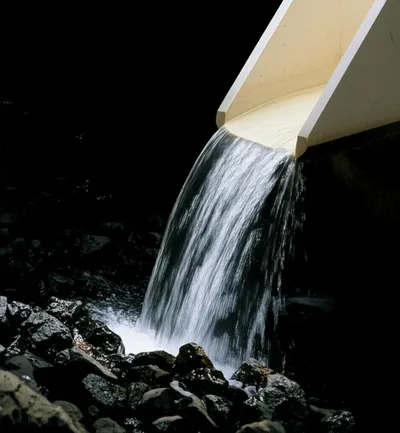
noun🔗Share수문, 물길The stream flowing through a floodgate."The sluice gate opened, releasing a strong stream of water. "수문이 열리면서 강한 물줄기가 쏟아져 나왔다.architectureutilityenvironmentgeographynaturesystemtechnologyplaceChat with AIVocabulary GamePractice Reading
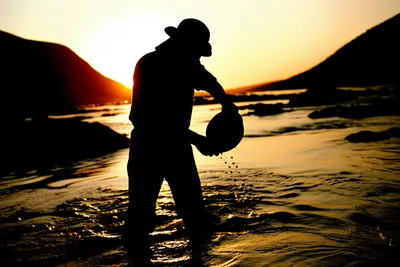
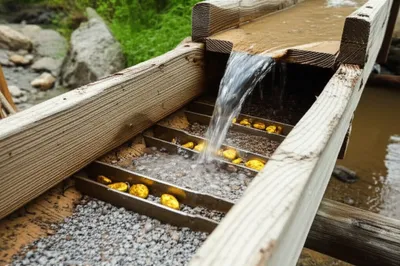
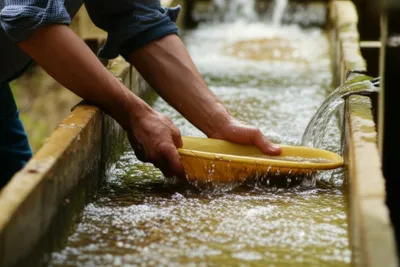
noun🔗Share수문, 물받이A long box or trough through which water flows, used for washing auriferous earth."The gold prospectors used the sluice to wash the dirt, hoping to find gold. "금광 탐사자들은 금을 찾기 위해 흙을 씻기 위해 물받이를 사용했다.geologyutilityagriculturetechnologymachineChat with AIVocabulary GamePractice Reading
noun🔗Sharewh-생략, 슬루싱An instance of wh-stranding ellipsis, or sluicing."The teacher's question, "Who wants to volunteer for the project?" elicited a sluice, as several students replied, "I do." "선생님의 질문, "누가 프로젝트에 자원하고 싶어?"는 여러 학생들이 "제가요."라고 대답하면서 wh-생략을 유발했다.linguisticsgrammarChat with AIVocabulary GamePractice Reading
verb🔗Share방류하다, 쏟아내다To emit by, or as by, flood gates."The dam operator sluiced the water from the reservoir to refill the town's water supply. "댐 운영자는 마을의 물 공급을 다시 채우기 위해 저수지에서 물을 방류했습니다.utilityenvironmenttechnologyChat with AIVocabulary GamePractice Reading
verb🔗Share물을 쏟아 붓다, 씻어내다To wet copiously, as by opening a sluice"to sluice meadows"초원에 물을 쏟아 붓다utilityactionenvironmentChat with AIVocabulary GamePractice Reading
verb🔗Share물로 씻다, 헹구다To wash with, or in, a stream of water running through a sluice."The farmer sluiced the muddy well with a powerful hose, washing away the dirt. "농부는 강력한 호스로 진흙 투성이 우물을 씻어내어 흙을 씻어냈다.agricultureutilityenvironmentChat with AIVocabulary GamePractice Reading
verb🔗Share씻어내다, 헹구다(more generally) To wash (down or out)."After the messy art project, the teacher had to sluice the paint off the tables with a hose. "엉망인 미술 프로젝트 후, 선생님은 호스로 테이블에서 페인트를 씻어내야 했다.utilityactionprocessChat with AIVocabulary GamePractice Reading
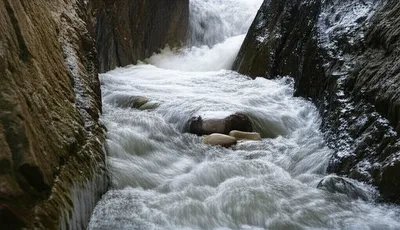
verb🔗Share흘려보내다, 쏟아지다To flow, pour."The water from the leaky faucet sluiced down the counter. "새는 수도꼭지에서 물이 흘러 카운터로 쏟아졌다.actionnatureprocessChat with AIVocabulary GamePractice Reading
verb🔗Share조정된 wh-질문에서 C'를 생략하다To elide the C` in a coordinated wh-question. See sluicing.""I know we need to buy something, but I don't remember what," where "what" sluices the rest of the question "what we need to buy". "나는 우리가 무언가를 사야 한다는 것을 알지만, 무엇을 사야 하는지 기억이 안 나.grammarlinguisticsphoneticsChat with AIVocabulary GamePractice Reading