
adjunction
Meanings

التحاق
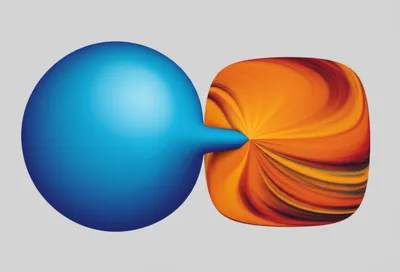
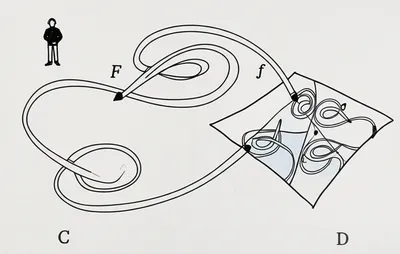
Given a pair of categories \mathcal{C} and \mathcal{D}: an anti-parallel pair of functors F:\mathcal{C}\rightarrow \mathcal{D} and G:\mathcal{D}\rightarrow \mathcal{C} and a natural transformation \eta:\mbox{id}C \rightarrow GF called “unit” such that for any object A \in \mathcal{C}, for any object B \in \mathcal{D}, and for any morphism f:A\rightarrow GB, there is a unique morphism g:FA\rightarrow B such that Gg \circ \etaA = f. (Note: there is another natural transformation called “counit” as well but its existence may be derived by theorem.) The pair of functors express a similarity between the pair of categories which is weaker than that of an equivalence of categories.
Examples :
"The professor explained the concept of adjunction between two mathematical structures using examples from group theory and linear algebra, showing how it establishes a formal connection between them. "
شرح الأستاذ مفهوم الالتحاق بين بنيتين رياضيتين باستخدام أمثلة من نظرية الزمر والجبر الخطي، موضحًا كيف يؤسس علاقة رسمية بينهما.
Related Words
connection noun
/kəˈnɛkʃən/
اتصال، ربط
"The connection between the two classrooms was established by installing a new phone line. "
تم إنشاء الاتصال بين الفصلين الدراسيين عن طريق تركيب خط هاتف جديد.

transformation noun
/ˌtɹæns.fə(ɹ)ˈmeɪ.ʃən/ /ˌtɹæns.fɔɹˈmeɪ.ʃən/
تحول، تغيير
"The transformation of the classroom from a noisy space to a quiet learning environment was remarkable. "
كان تحول الفصل الدراسي من مساحة صاخبة إلى بيئة تعلم هادئة أمرًا ملحوظًا.








establishes verb
/ɪˈstæblɪʃɪz/ /əˈstæblɪʃɪz/
يؤسس، يؤكد
تضع الشركة إرشادات واضحة لسلوك الموظفين لضمان بيئة عمل احترافية.