


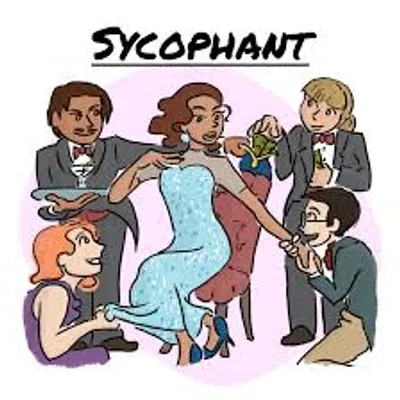


noun🔗ShareSyndic, flagorneurOne who uses obsequious compliments to gain self-serving favor or advantage from another; a servile flatterer."The sycophant in the office tried to win the boss's favor by showering him with exaggerated praise. "Le flagorneur du bureau a essayé de gagner les faveurs du patron en l'inondant d'éloges exagérés.characterpersonattitudeorganizationsocietypoliticsgovernmenthumanmoralvalueChat with AIVocabulary GamePractice Reading
noun🔗ShareSyndic, flagorneurOne who seeks to gain through the powerful and influential."The sycophant constantly praised the teacher's every comment, hoping to get a better grade. "Le flagorneur louait constamment chaque commentaire du professeur, espérant obtenir une meilleure note.characterpersonattitudesocietyChat with AIVocabulary GamePractice Reading
noun🔗ShareDénonciateur, flagorneurAn informer; a talebearer."Maria was known as a sycophant in the office because she always reported her coworkers' mistakes to the boss. "Maria était connue comme une dénonciatrice au bureau parce qu'elle rapportait toujours les erreurs de ses collègues au patron.characterpersonattitudeChat with AIVocabulary GamePractice Reading
verb🔗ShareDénoncer, calomnierTo inform against; hence, to calumniate."The student sycophanted on his classmate, claiming he had cheated on the test, hoping to gain favor with the teacher. "L'élève a dénoncé son camarade de classe, affirmant qu'il avait triché au test, dans l'espoir de gagner les faveurs du professeur.characterattitudeactionwordChat with AIVocabulary GamePractice Reading
verb🔗ShareFlatter, faire du lèche-bottesTo play the sycophant toward; to flatter obsequiously.""To get a better grade, the student started to sycophant the teacher by excessively praising every lecture." "Pour obtenir une meilleure note, l'étudiant a commencé à flatter le professeur en louant excessivement chaque cours.characterattitudeactionsocietyhumanorganizationChat with AIVocabulary GamePractice Reading