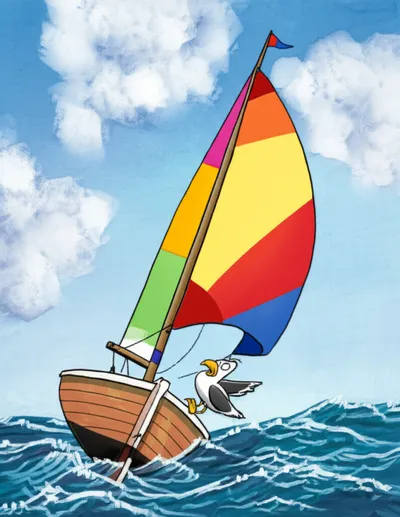
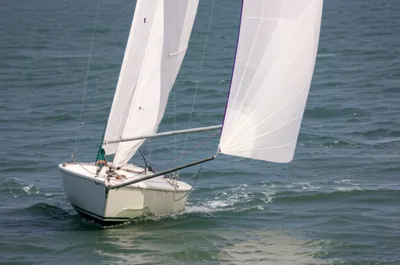
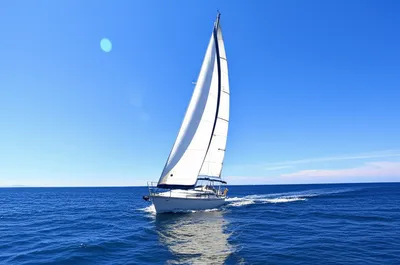
verb Descargar 🔗Compartir Trasluchar To shift a fore-and-aft sail from one side of a sailing vessel to the other, while sailing before the wind. Examples : "As the wind shifted, the sailor gybed the mainsail to keep the boat moving downwind. " Cuando el viento cambió, el marinero trasluchó la vela mayor para mantener el barco a favor del viento. nautical sailing vehicle Chat con IAJuego de vocabularioPracticar lectura
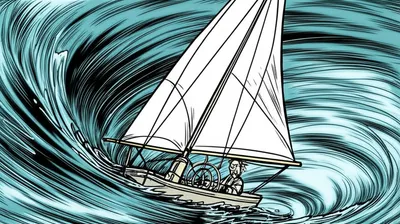
verb Descargar 🔗Compartir Trasluchar Of a fore-and-aft sail or its boom: to shift, often forcefully and suddenly, from one side of a sailing vessel to the other. Examples : "The sailboat gybed suddenly in the strong wind, causing the boom to swing across the deck. " El velero trasluchó repentinamente con el fuerte viento, haciendo que la botavara se balanceara por la cubierta. nautical sailing sport technical Chat con IAJuego de vocabularioPracticar lectura
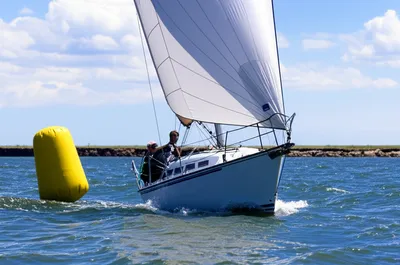
verb Descargar 🔗Compartir Trasluchar Generally of a small sailing vessel: to change tack with the wind crossing behind the vessel. Examples : "The small sailboat gybed to avoid hitting the buoy, swinging its boom across the water. " El pequeño velero trasluchó para evitar golpear la boya, balanceando su botavara sobre el agua. nautical sailing vehicle sport Chat con IAJuego de vocabularioPracticar lectura
verb Descargar 🔗Compartir Dudar, vacilar (by extension) Often as gybe at: to balk, hesitate, or vacillate when faced with a course of action, plan, or proposal. Examples : ""He initially agreed to lead the project, but then gybed at the last minute when he realized the workload." " Inicialmente aceptó liderar el proyecto, pero luego dudó en el último minuto cuando se dio cuenta de la carga de trabajo. attitude action plan nautical sailing Chat con IAJuego de vocabularioPracticar lectura
verb Descargar 🔗Compartir Trasluchar Alternative spelling of jibe Examples : "The sailboat gybed to catch the wind on the other side of the lake. " El velero trasluchó para tomar el viento en el otro lado del lago. nautical sailing Chat con IAJuego de vocabularioPracticar lectura