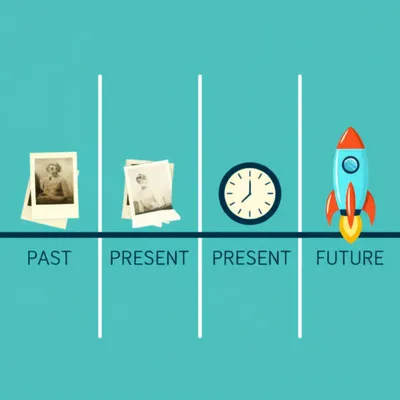
noun Télécharger 🔗Partager Temps verbaux (grammar) Any of the forms of a verb which distinguish when an action or state of being occurs or exists. Examples : "Learning to use different verb tenses correctly, like past, present, and future, is important for clear communication. " Apprendre à utiliser correctement les différents temps verbaux, comme le passé, le présent et le futur, est essentiel pour une communication claire. grammar language linguistics Chat avec IAJeu de vocabulairePratiquer la lecture
noun Télécharger 🔗Partager Temps verbaux (grammar) An inflected form of a verb that indicates tense. Examples : "English only has a present tense and a past tense; it has no future tense." L'anglais n'a qu'un temps présent et un temps passé ; il n'a pas de futur. grammar language linguistics Chat avec IAJeu de vocabulairePratiquer la lecture
noun Télécharger 🔗Partager Temps verbaux The property of indicating the point in time at which an action or state of being occurs or exists. Examples : "Dyirbal verbs are not inflected for tense." Les verbes dyirbal ne sont pas conjugués selon les temps verbaux. grammar language linguistics time Chat avec IAJeu de vocabulairePratiquer la lecture
verb Télécharger 🔗Partager Mettre à un temps (grammar) To apply a tense to. Examples : "tensing a verb" Mettre un verbe à un temps. grammar language linguistics Chat avec IAJeu de vocabulairePratiquer la lecture
verb Télécharger 🔗Partager Tendre, crisper To make or become tense. Examples : "When the dog barked loudly, the little boy tenses his shoulders in fear. " Quand le chien a aboyé fort, le petit garçon a crispé ses épaules de peur. physiology mind Chat avec IAJeu de vocabulairePratiquer la lecture