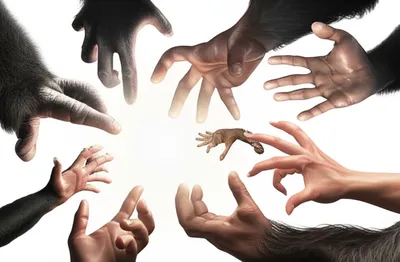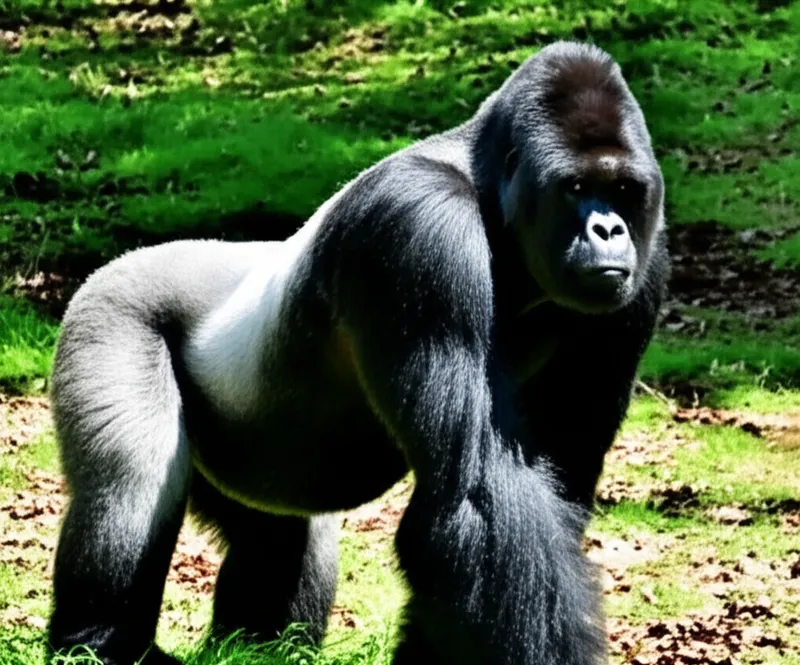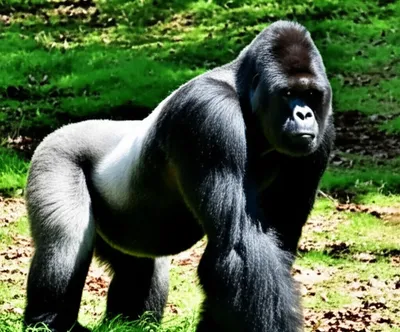
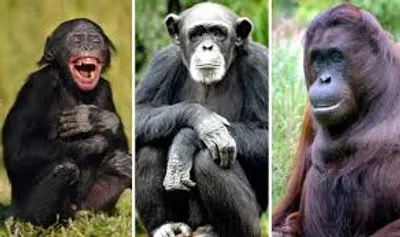
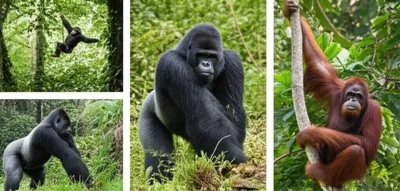

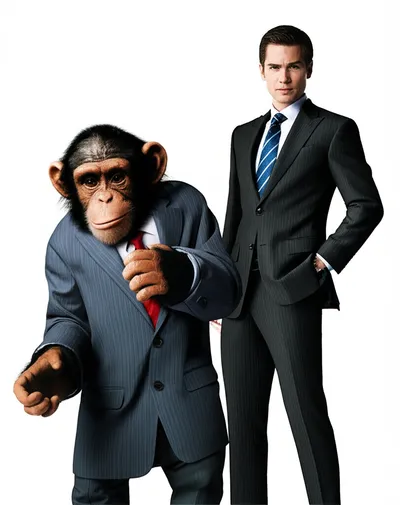

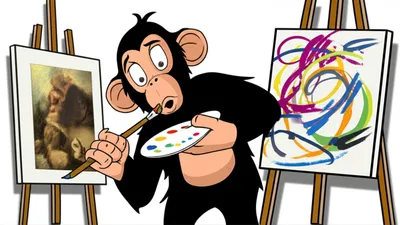
noun🔗Share유인원A primate of the clade Hominoidea, generally larger than monkeys and distinguished from them by having no tail."The zookeeper explained that an ape like a gorilla doesn't have a tail, unlike most monkeys. "동물원 사육사는 고릴라와 같은 유인원은 대부분의 원숭이와 달리 꼬리가 없다고 설명했다.animalbiologyorganismnaturesciencehumanChat with AIVocabulary GamePractice Reading
noun🔗Share유인원Any such primate other than a human."The zookeeper told us that the gorilla is a type of ape. "동물원 사육사는 우리에게 고릴라가 유인원의 일종이라고 말했다.animalbiologyorganismChat with AIVocabulary GamePractice Reading
noun🔗Share야만인, 무례한 사람An uncivilised person.""Don't be such an ape and throw your trash on the ground; use the bin!" "야만인처럼 굴지 말고 쓰레기를 땅에 버리지 말고, 쓰레기통을 사용해!personinhumancharacterChat with AIVocabulary GamePractice Reading
noun🔗Share흉내쟁이, 원숭이One who apes; a foolish imitator."The new student was a bit of an ape, copying everything the popular kids did, even their bad habits. "새로운 학생은 약간 흉내쟁이여서 인기 있는 아이들이 하는 모든 것을 따라했고, 심지어 그들의 나쁜 습관까지 따라했다.characterpersonhumanChat with AIVocabulary GamePractice Reading
verb🔗Share흉내 내다To behave like an ape."The toddler was apeing his older brother, mimicking his silly jumping and shouting. "그 어린 아이는 형의 어리석은 점프와 고함을 흉내 내며 형을 흉내 내고 있었다.animalactionentertainmentChat with AIVocabulary GamePractice Reading
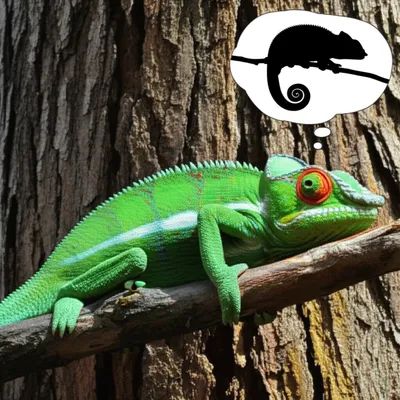
verb🔗Share흉내내다, 흉내내To imitate or mimic, particularly to imitate poorly."The student was trying to ape the teacher's confident posture, but it looked awkward and silly. "그 학생은 선생님의 자신감 있는 자세를 흉내내려고 했지만 어색하고 우스꽝스러워 보였다.actionhumananimalChat with AIVocabulary GamePractice Reading
adjective🔗Share미친, 정신 나간Wild; crazy."He went ape when he heard the bad news."그는 나쁜 소식을 듣고 미쳐버렸다.characterattitudemindpersonChat with AIVocabulary GamePractice Reading