




adjective🔗ShareReflektierend, rückbezüglichThat reflects, or redirects back to the source."Mirrors are reflective."Spiegel sind reflektierend.physicsgrammarlanguageChat with AIVocabulary GamePractice Reading
adjective🔗ShareNachdenklich, reflektierendPondering, especially thinking back on the past."He always becomes reflective in preparation for the new year."Er wird immer nachdenklich in Vorbereitung auf das neue Jahr.mindphilosophytimehistoryChat with AIVocabulary GamePractice Reading
adjective🔗ShareZeigend, aufweisendThat reveals or shows; revealing; indicative of."The teacher's quiet, thoughtful demeanor was a reflexive indication that she was deeply considering the students' questions. "Das ruhige, nachdenkliche Auftreten der Lehrerin war ein aufweisender Hinweis darauf, dass sie die Fragen der Schüler eingehend bedachte.characterlinguisticslanguageChat with AIVocabulary GamePractice Reading
adjective🔗ShareReflektierend, rückbezüglichInvolving reflection."The shiny surface of the new car had a reflexive quality, mirroring the surrounding trees and sky. "Die glänzende Oberfläche des neuen Autos hatte eine reflektierende Qualität, die die umliegenden Bäume und den Himmel spiegelte.physicslanguageChat with AIVocabulary GamePractice Reading
adjective🔗Sharereziprok(grammar) Reciprocal."The children had a reflexive reaction, sharing their toys with each other. "Die Kinder zeigten eine reziproke Reaktion und teilten ihre Spielsachen miteinander.grammarlanguagelinguisticsChat with AIVocabulary GamePractice Reading
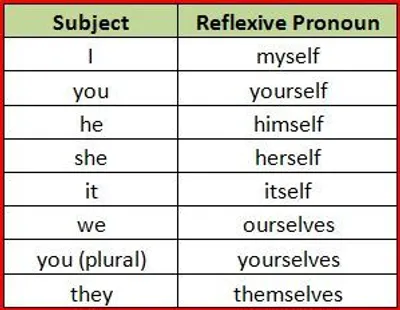
noun🔗ShareReflexivpronomen(grammar) A reflexive pronoun."The reflexive pronoun "myself" is used in the sentence: "I cooked dinner for myself." "Das Reflexivpronomen „mich selbst“ wird in dem Satz verwendet: „Ich habe das Abendessen für mich selbst gekocht.“grammarlanguagelinguisticsChat with AIVocabulary GamePractice Reading
noun🔗ShareReflexivverb(grammar) A reflexive verb."The grammar lesson today focused on the difference between a transitive verb and a reflexive. "Die Grammatikstunde heute konzentrierte sich auf den Unterschied zwischen einem transitiven Verb und einem Reflexivverb.grammarlinguisticslanguageChat with AIVocabulary GamePractice Reading
adjective🔗ShareReflexiv(grammar) Referring back to the subject, or having an object equal to the subject."In the sentence "He hurt himself," the pronoun "himself" is reflexive because it refers back to the subject "He." "In dem Satz „He hurt himself“ ist das Pronomen „himself“ reflexiv, weil es sich auf das Subjekt „He“ bezieht.grammarlanguagelinguisticsChat with AIVocabulary GamePractice Reading
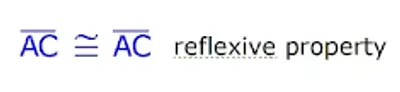
adjective🔗ShareReflexivOf a relation R on a set S, such that xRx for all members x of S (that is, the relation holds between any element of the set and itself).""Equals" is a reflexive relation.""Gleich" ist eine reflexive Relation.mathlogicChat with AIVocabulary GamePractice Reading
adjective🔗ShareReflexivOf or resulting from a reflex."The electric shock elicited an automatic and reflexive response from him."Der elektrische Schock löste eine automatische und reflexive Reaktion bei ihm aus.physiologymedicineChat with AIVocabulary GamePractice Reading
adjective🔗ShareSpontan, unwillkürlichProducing immediate response, spontaneous."a reflexive dislike"Ein unwillkürlicher Abneigung.physiologymindactionChat with AIVocabulary GamePractice Reading