




verb🔗ShareWiderlegen, entkräftenTo contradict, to provide proof that something is not."The thought is that you see an episode of observation, experiment, or reasoning as confirming or infirming a hypothesis depending on whether your probability for it increases or decreases during the episode."Der Gedanke ist, dass man eine Beobachtung, ein Experiment oder eine Schlussfolgerung als Bestätigung oder Widerlegung einer Hypothese ansieht, je nachdem, ob sich die Wahrscheinlichkeit dafür während der Episode erhöht oder verringert.statementlogiclanguageChat with AIVocabulary GamePractice Reading
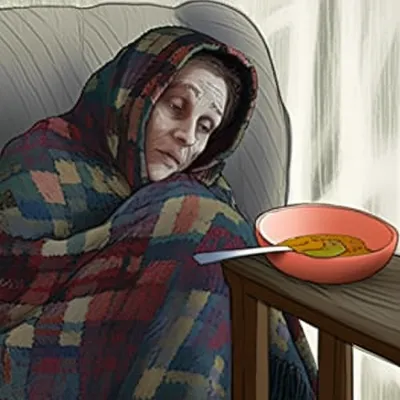
adjective🔗ShareSchwach, krank, gebrechlichWeak or ill, not in good health."My grandmother has become too infirm to live alone, so she's moving in with us. "Meine Großmutter ist zu schwach geworden, um allein zu leben, also zieht sie bei uns ein.medicinebodyconditionagephysiologypersonChat with AIVocabulary GamePractice Reading
adjective🔗ShareUnentschlossen, schwachIrresolute; weak of mind or will."The student, feeling infirm about his answer, hesitated before raising his hand. "Der Student, der sich unentschlossen über seine Antwort fühlte, zögerte, bevor er die Hand hob.mindconditioncharacterabilityChat with AIVocabulary GamePractice Reading
adjective🔗ShareGebrechlich, schwach, hinfälligFrail; unstable; insecure."The elderly man was too infirm to walk without his cane. "Der alte Mann war zu gebrechlich, um ohne seinen Stock zu gehen.medicineagebodyconditionhumanChat with AIVocabulary GamePractice Reading