

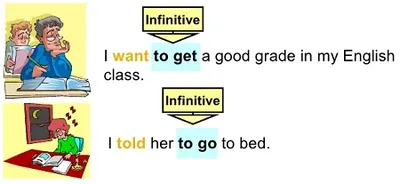

noun🔗ShareInfinitiv(grammar) the infinitive mood or mode (a grammatical mood)"In the sentence "I want to eat," the phrase "to eat" is an example of the infinitive. "In dem Satz „Ich möchte essen“ ist die Phrase „zu essen“ ein Beispiel für den Infinitiv.grammarlanguagelinguisticsChat with AIVocabulary GamePractice Reading
noun🔗ShareInfinitiv(grammar) A non-finite verb form considered neutral with respect to inflection; depending on language variously found used with auxiliary verbs, in subordinate clauses, or acting as a gerund, and often as the dictionary form."The infinitive "to learn" is often used in a sentence with "want" or "need," as in "I want to learn more about history." "Der Infinitiv „zu lernen“ wird oft in einem Satz mit „wollen“ oder „brauchen“ verwendet, wie in „Ich möchte mehr über Geschichte lernen“.grammarlanguagelinguisticsChat with AIVocabulary GamePractice Reading
noun🔗ShareInfinitiv, Nennform(grammar) A verbal noun formed from the infinitive of a verb."The infinitive "to learn" is a crucial part of the curriculum. "Der Infinitiv „zu lernen“ ist ein entscheidender Bestandteil des Lehrplans.grammarlanguageChat with AIVocabulary GamePractice Reading
adjective🔗ShareMit dem Infinitiv gebildet(grammar) Formed with the infinitive."The infinitive form of the verb "to be" is crucial for constructing simple sentences. "Die Infinitivform des Verbs „to be“ ist entscheidend für den Aufbau einfacher Sätze.grammarlinguisticsChat with AIVocabulary GamePractice Reading
adjective🔗ShareUnbegrenzt, unbeschränkt, unbestimmtUnlimited; not bounded or restricted; undefined."The possibilities for what she could do after graduation felt infinitive; there were so many paths she could take. "Die Möglichkeiten für das, was sie nach dem Abschluss tun konnte, fühlten sich unbegrenzt an; es gab so viele Wege, die sie einschlagen konnte.philosophylanguagelinguisticsbeingwordChat with AIVocabulary GamePractice Reading