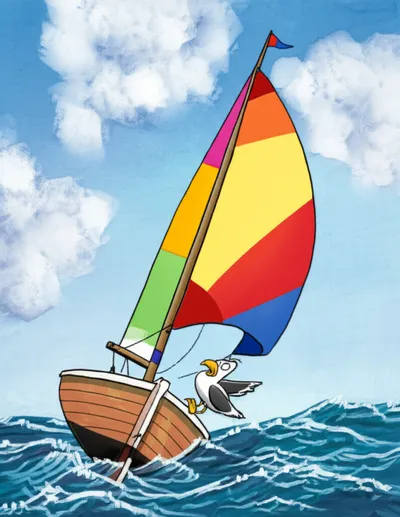
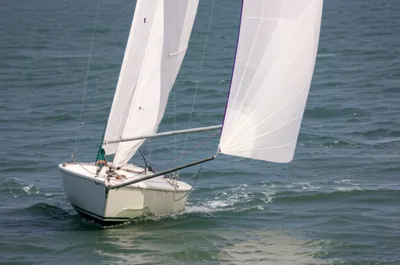
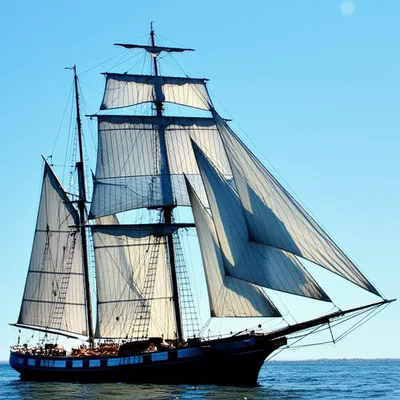
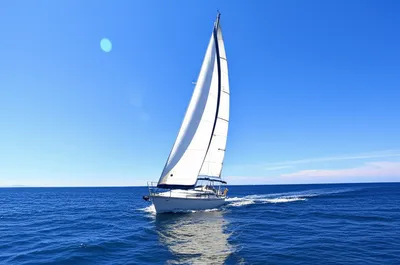
verb Télécharger 🔗Partager Empanner To shift a fore-and-aft sail from one side of a sailing vessel to the other, while sailing before the wind. Examples : "As the wind shifted, the sailor gybed the mainsail to keep the boat moving downwind. " Lorsque le vent a changé, le marin a empanné la grand-voile pour maintenir le bateau sous le vent. nautical sailing vehicle Chat avec IAJeu de vocabulairePratiquer la lecture
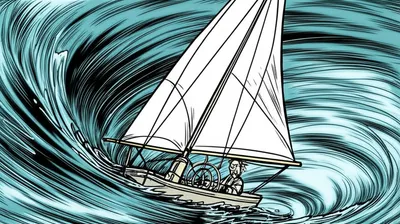
verb Télécharger 🔗Partager Empanner Of a fore-and-aft sail or its boom: to shift, often forcefully and suddenly, from one side of a sailing vessel to the other. Examples : "The sailboat gybed suddenly in the strong wind, causing the boom to swing across the deck. " Le voilier a empanné soudainement dans le vent fort, faisant basculer la bôme sur le pont. nautical sailing sport technical Chat avec IAJeu de vocabulairePratiquer la lecture
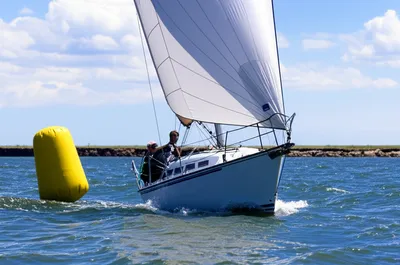
verb Télécharger 🔗Partager Empanner Generally of a small sailing vessel: to change tack with the wind crossing behind the vessel. Examples : "The small sailboat gybed to avoid hitting the buoy, swinging its boom across the water. " Le petit voilier a empanné pour éviter de heurter la bouée, balançant sa bôme sur l'eau. nautical sailing vehicle sport Chat avec IAJeu de vocabulairePratiquer la lecture
verb Télécharger 🔗Partager Hésiter, tergiverser (by extension) Often as gybe at: to balk, hesitate, or vacillate when faced with a course of action, plan, or proposal. Examples : ""He initially agreed to lead the project, but then gybed at the last minute when he realized the workload." " Il a d'abord accepté de diriger le projet, mais a ensuite hésité à la dernière minute lorsqu'il a réalisé la charge de travail. attitude action plan nautical sailing Chat avec IAJeu de vocabulairePratiquer la lecture
verb Télécharger 🔗Partager Empanner Alternative spelling of jibe Examples : "The sailboat gybed to catch the wind on the other side of the lake. " Le voilier a empanné pour attraper le vent de l'autre côté du lac. nautical sailing Chat avec IAJeu de vocabulairePratiquer la lecture