












noun🔗ShareUn riche, une personne aiséeA wealthy or privileged person."The wealthy have in our town often send their children to private schools. "Les riches de notre ville envoient souvent leurs enfants dans des écoles privées.personasseteconomysocietyessentialChat with AIVocabulary GamePractice Reading
noun🔗SharePossesseurOne who has some (contextually specified) thing."My sister is a very good have of patience. "Ma sœur est une personne très patiente.personthingessentialChat with AIVocabulary GamePractice Reading
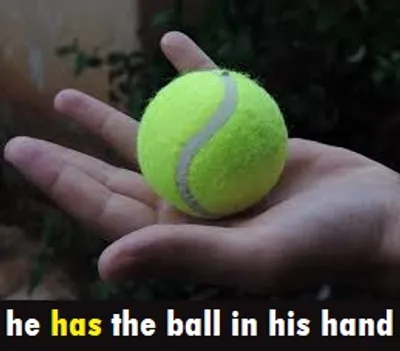
verb🔗SharePosséder, avoirTo possess, own."I have a house and a car."J'ai une maison et une voiture.propertyassetessentialChat with AIVocabulary GamePractice Reading
verb🔗ShareAvoir, disposer deTo hold, as something at someone's disposal."The teacher has all the necessary textbooks available for the students. "Le professeur a tous les manuels scolaires nécessaires à la disposition des élèves.abilitypropertyessentialChat with AIVocabulary GamePractice Reading
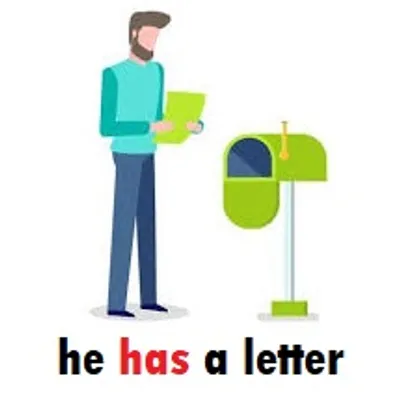
verb🔗ShareAvoirUsed to state the existence or presence of someone in a specified relationship with the subject."I have a really mean boss."J'ai un patron vraiment méchant.languagegrammaressentialChat with AIVocabulary GamePractice Reading
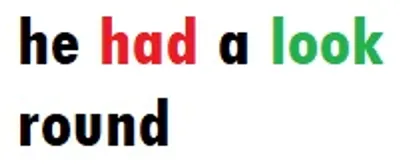
verb🔗SharePrendre, consommer, manger, boire, faireTo partake of (a particular substance, especially food or drink, or action or activity)."Can I have a look at that?"Puis-je jeter un coup d'œil à ça ?fooddrinkactionessentialChat with AIVocabulary GamePractice Reading
verb🔗ShareAssister à, participer àTo be scheduled to attend, undertake or participate in."My brother has a doctor's appointment next Tuesday. "Mon frère a un rendez-vous chez le médecin mardi prochain.plantimeeventessentialChat with AIVocabulary GamePractice Reading
verb🔗ShareÉprouver, subirTo experience, go through, undergo."He had surgery on his hip yesterday."Il a subi une opération de la hanche hier.actionbeingessentialChat with AIVocabulary GamePractice Reading
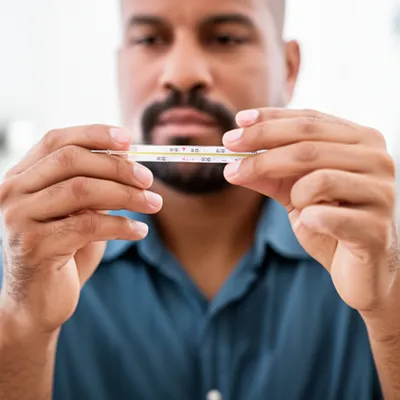
verb🔗ShareSouffrir de, avoirTo be afflicted with, suffer from."He had a cold last week."Il a eu un rhume la semaine dernière.medicinediseasesufferingessentialChat with AIVocabulary GamePractice Reading
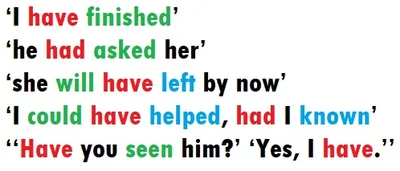
verb🔗ShareAvoir(auxiliary verb, taking a past participle) Used in forming the perfect aspect."I had already eaten."J'avais déjà mangé.grammarlanguagelinguisticspast participleessentialChat with AIVocabulary GamePractice Reading
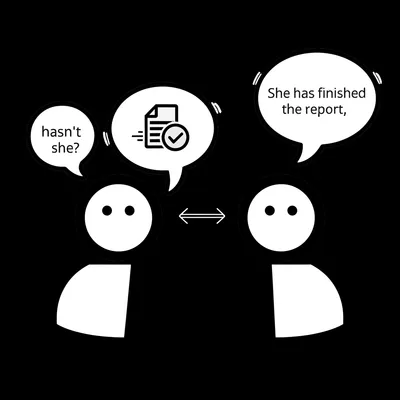
verb🔗ShareAvoirUsed as an interrogative verb before a pronoun to form a tag question, echoing a previous use of 'have' as an auxiliary verb or, in certain cases, main verb. (For further discussion, see the appendix English tag questions.)"You've been studying hard, haven't you? "Tu as beaucoup étudié, n'est-ce pas ?grammarlinguisticswordessentialChat with AIVocabulary GamePractice Reading
verb🔗ShareDevoir(auxiliary verb, taking a to-infinitive) See have to."I have to go."Je dois y aller.grammarlanguagelinguisticsessentialChat with AIVocabulary GamePractice Reading
verb🔗ShareAccoucher, mettre au mondeTo give birth to."My mother had me when she was 25."Ma mère m'a mis au monde quand elle avait 25 ans.familyphysiologybiologyhumanessentialChat with AIVocabulary GamePractice Reading
verb🔗ShareAvoir des relations sexuelles, coucher avecTo engage in sexual intercourse with."The couple decided to have a baby. "Le couple a décidé d'avoir un bébé.sexhumanactionessentialChat with AIVocabulary GamePractice Reading
verb🔗ShareAvoir une relation amoureuse avecTo accept as a romantic partner."Despite my protestations of love, she would not have me."Malgré mes déclarations d'amour, elle ne voulait pas avoir de relation amoureuse avec moi.humanpersonessentialChat with AIVocabulary GamePractice Reading
verb🔗ShareFaire, laisser(transitive with bare infinitive) To cause to, by a command, request or invitation."They had me feed their dog while they were out of town."Ils m'ont fait nourrir leur chien pendant qu'ils étaient hors de la ville.languagegrammaressentialChat with AIVocabulary GamePractice Reading
verb🔗ShareFaire, rendre(transitive with adjective or adjective-phrase complement) To cause to be."He had him arrested for trespassing."Il l'a fait arrêter pour intrusion.languagegrammaressentialChat with AIVocabulary GamePractice Reading
verb🔗ShareSubir, ressentir(transitive with bare infinitive) To be affected by an occurrence. (Used in supplying a topic that is not a verb argument.)"The noisy construction outside the school has affected the students' concentration. "La construction bruyante à l'extérieur de l'école a affecté la concentration des élèves.languagegrammaressentialChat with AIVocabulary GamePractice Reading
verb🔗ShareConsidérer comme, tenir pour(transitive with adjective or adjective-phrase complement) To depict as being."The artist's painting has the sky depicted as a fiery orange. "La peinture de l'artiste considère le ciel comme un orange flamboyant.languagelinguisticsessentialChat with AIVocabulary GamePractice Reading
verb🔗ShareVaincre, prendreTo defeat in a fight; take."I could have him!"Je pourrais le vaincre !militarywaractionessentialChat with AIVocabulary GamePractice Reading
verb🔗ShareSavoir parler(obsolete outside Ireland) To be able to speak (a language)."I have no German."Je ne sais pas parler allemand.languagelinguisticscommunicationabilityessentialChat with AIVocabulary GamePractice Reading
verb🔗ShareÉprouver, ressentirTo feel or be (especially painfully) aware of."Dan certainly has arms today, probably from scraping paint off four columns the day before."Dan a certainement mal aux bras aujourd'hui, probablement à cause du grattage de la peinture sur quatre colonnes la veille.sensationemotionmindessentialChat with AIVocabulary GamePractice Reading
verb🔗ShareTromper, duperTo trick, to deceive."You had me alright! I never would have thought that was just a joke."Tu m'as bien eu ! Je n'aurais jamais cru que ce n'était qu'une blague.actioncharacterattitudecommunicationwordessentialChat with AIVocabulary GamePractice Reading
verb🔗SharePermettre, tolérer(often with present participle) To allow; to tolerate."My parents have to allow me to stay up late on weekends. "Mes parents doivent me permettre de veiller tard le week-end.attitudeactionessentialChat with AIVocabulary GamePractice Reading
verb🔗ShareCroire, se faire avoir par(often used in the negative) To believe, buy, be taken in by."My brother didn't have that the new phone was the best; he just thought it was expensive. "Mon frère n'a pas cru que le nouveau téléphone était le meilleur ; il pensait juste qu'il était cher.mindattitudeessentialChat with AIVocabulary GamePractice Reading
verb🔗ShareRecevoir, hébergerTo host someone; to take in as a guest."Thank you for having me!"Merci de m'avoir reçu !entertainmentfoodessentialChat with AIVocabulary GamePractice Reading
verb🔗ShareObtenir, avoirTo get a reading, measurement, or result from an instrument or calculation."I have two contacts on my scope."J'ai deux contacts sur mon oscilloscope.outcomemathscienceessentialChat with AIVocabulary GamePractice Reading
verb🔗ShareDélibérer(of a jury) To consider a court proceeding that has been completed; to begin deliberations on a case."The jury has to consider the evidence carefully before they reach a verdict. "Le jury doit délibérer attentivement sur les preuves avant de rendre son verdict.lawgovernmentessentialChat with AIVocabulary GamePractice Reading
verb🔗ShareObserverTo make an observation of (a bird species)."The ornithologist had the rare bluebird species in his backyard. "L'ornithologue a observé l'espèce rare d'oiseau bleu dans son jardin.birdanimalnatureessentialChat with AIVocabulary GamePractice Reading
noun🔗ShareTromperie, duperieA fraud or deception; something misleading."The advertisement had a huge have; it promised a perfect figure in just a week, but it was a scam. "La publicité était une énorme tromperie ; elle promettait une silhouette parfaite en une semaine, mais c'était une arnaque.businessmoralsocietyessentialChat with AIVocabulary GamePractice Reading