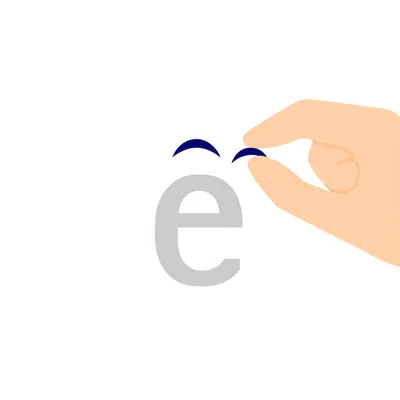
noun Tải xuống 🔗Chia sẻ Dấu phụ, dấu thanh. A special mark added to a letter to indicate a different pronunciation, stress, tone, or meaning. Ví dụ : "The French word "hôtel" uses a diacritic, the circumflex (ˆ), over the letter "o" to indicate a different pronunciation. " Trong tiếng Pháp, từ "hôtel" sử dụng một dấu phụ, cụ thể là dấu mũ (ˆ), trên chữ "o" để chỉ cách phát âm khác. grammar language phonetics writing linguistics word Chat với AIGame từ vựngLuyện đọc
adjective Tải xuống 🔗Chia sẻ Dấu phân biệt. Distinguishing Ví dụ : "The diacritic mark on the "e" in "résumé" is distinguishing because it changes the pronunciation and meaning from the verb "resume." " Dấu phụ trên chữ "e" trong từ "résumé" là một dấu phân biệt, vì nó thay đổi cách phát âm và nghĩa so với động từ "resume". language grammar phonetics Chat với AIGame từ vựngLuyện đọc
adjective Tải xuống 🔗Chia sẻ Dấu phân biệt, dấu phụ. Denoting a distinguishing mark applied to a letter or character. Ví dụ : "The Spanish word "mañana" has a diacritic tilde over the "n," changing its pronunciation and meaning from "morning" to "tomorrow." " Trong tiếng Tây Ban Nha, từ "mañana" có dấu ngã (dấu phân biệt/dấu phụ) trên chữ "n", làm thay đổi cách phát âm và nghĩa của nó từ "buổi sáng" thành "ngày mai". language writing linguistics phonetics grammar Chat với AIGame từ vựngLuyện đọc