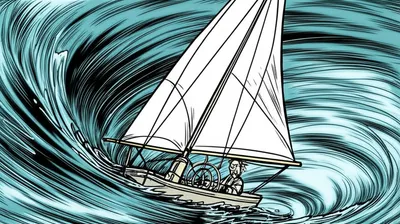
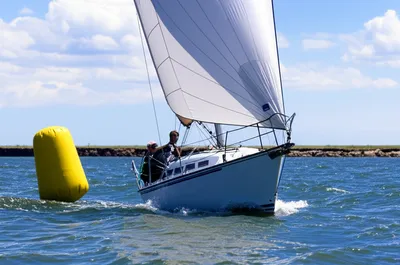
verb Tải xuống 🔗Chia sẻ Lái ngang, chuyển hướng buồm. To shift a fore-and-aft sail from one side of a sailing vessel to the other, while sailing before the wind. Ví dụ : "As the wind shifted, the sailor gybed the mainsail to keep the boat moving downwind. " Khi gió đổi chiều, người thủy thủ lái ngang buồm chính để giữ cho thuyền tiếp tục đi xuôi gió. nautical sailing vehicle Chat với AIGame từ vựngLuyện đọc
verb Tải xuống 🔗Chia sẻ Lái bùm, chuyển hướng (buồm). Of a fore-and-aft sail or its boom: to shift, often forcefully and suddenly, from one side of a sailing vessel to the other. Ví dụ : "The sailboat gybed suddenly in the strong wind, causing the boom to swing across the deck. " Chiếc thuyền buồm lái bùm đột ngột trong gió lớn, khiến cần buồm văng mạnh sang phía bên kia mạn thuyền. nautical sailing sport technical Chat với AIGame từ vựngLuyện đọc
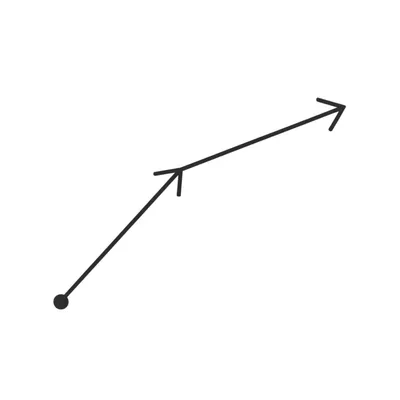
verb Tải xuống 🔗Chia sẻ Lái ngang, chuyển hướng gió sau. Generally of a small sailing vessel: to change tack with the wind crossing behind the vessel. Ví dụ : "The small sailboat gybed to avoid hitting the buoy, swinging its boom across the water. " Chiếc thuyền buồm nhỏ lái ngang, chuyển hướng gió sau để tránh va vào phao, và cần cẩu của nó vung ngang mặt nước. nautical sailing vehicle sport Chat với AIGame từ vựngLuyện đọc
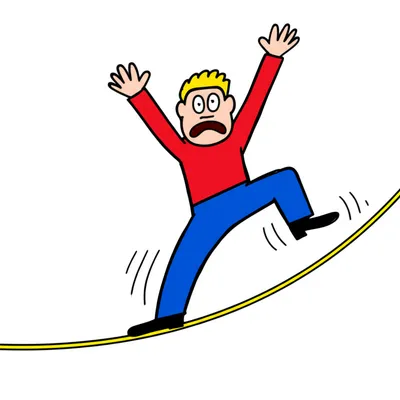
verb Tải xuống 🔗Chia sẻ Do dự, ngần ngại, chần chừ. (by extension) Often as gybe at: to balk, hesitate, or vacillate when faced with a course of action, plan, or proposal. Ví dụ : ""He initially agreed to lead the project, but then gybed at the last minute when he realized the workload." " Ban đầu anh ấy đồng ý dẫn dắt dự án, nhưng rồi phút cuối lại đổi ý, chần chừ khi nhận ra khối lượng công việc quá lớn. attitude action plan nautical sailing Chat với AIGame từ vựngLuyện đọc
verb Tải xuống 🔗Chia sẻ Bẻ lái, chuyển hướng. Alternative spelling of jibe Ví dụ : "The sailboat gybed to catch the wind on the other side of the lake. " Chiếc thuyền buồm bẻ lái để đón gió từ phía bên kia hồ. nautical sailing Chat với AIGame từ vựngLuyện đọc