







verb🔗ShareĐóng, khép, bịt. (physical) To remove a gap."The carpenter closed the gap in the fence with a new piece of wood. "Người thợ mộc đã bịt kín chỗ hở trên hàng rào bằng một miếng gỗ mới.gapactionChat với AIGame từ vựngLuyện đọc
verb🔗ShareĐóng cửa, kết thúc, chấm dứt. (social) To finish, to terminate."The school year closed on June 15th. "Năm học kết thúc vào ngày 15 tháng 6.societyorganizationbusinessChat với AIGame từ vựngLuyện đọc
verb🔗ShareVây quanh, bao quanh, khép kín, giới hạn. To come or gather around; to enclose; to encompass; to confine."The family closed around the table for dinner. "Cả nhà quây quần bên bàn ăn để dùng bữa tối.areaplacestructureChat với AIGame từ vựngLuyện đọc
verb🔗ShareKhép kín. To have a vector sum of 0; that is, to form a closed polygon."The hikers closed their route by returning to the starting point, creating a closed loop. "Những người đi bộ khép kín lộ trình của họ bằng cách quay trở lại điểm xuất phát, tạo thành một vòng khép kín.mathphysicsChat với AIGame từ vựngLuyện đọc
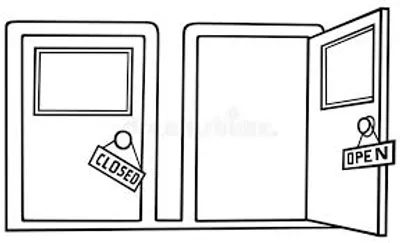
adjective🔗ShareĐóng, kín, bế tắc. Sealed, made inaccessible or impassable; not open."The library's doors were closed, so we couldn't enter. "Cửa thư viện đã đóng kín nên chúng tôi không vào được.conditionstatesituationChat với AIGame từ vựngLuyện đọc
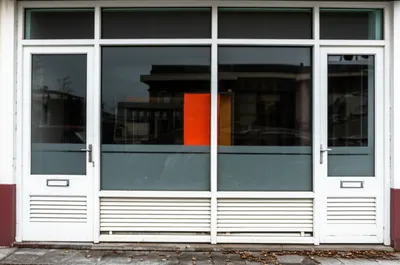
adjective🔗ShareĐóng cửa, ngưng hoạt động. (of a store or business) Not operating or conducting trade."The bakery was closed on Sundays. "Tiệm bánh đóng cửa vào các ngày chủ nhật.businesscommerceChat với AIGame từ vựngLuyện đọc
adjective🔗ShareKín, bí mật, không công khai. Not public."closed source a closed committee"Mã nguồn kín; một ủy ban kín.organizationbusinessgovernmentChat với AIGame từ vựngLuyện đọc
adjective🔗ShareKín. (of a set) Having an open complement."The set of students who passed the math test is a closed set, because all the students who didn't pass are in the complement. "Tập hợp các học sinh đậu bài kiểm tra toán là một tập hợp kín, bởi vì tất cả các học sinh không đậu đều nằm trong phần bù của tập hợp đó.mathChat với AIGame từ vựngLuyện đọc
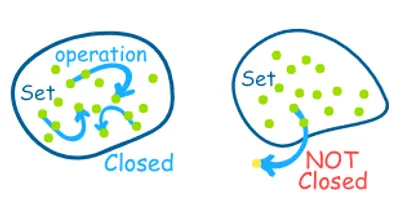
adjective🔗ShareKín, đóng. (of a set) Such that its image under the specified operation is contained in it."The set of integers is closed under addition: orall x,yinmathbb{Z},x+yinmathbb{Z}."Tập hợp các số nguyên là kín đối với phép cộng: với mọi x, y thuộc tập hợp số nguyên, x + y cũng thuộc tập hợp số nguyên.mathtechnicalChat với AIGame từ vựngLuyện đọc
adjective🔗ShareĐóng, kín. (of a formula) Lacking a free variable."The formula for the area of a square is a closed formula; it doesn't have any letters representing unknown sides. "Công thức tính diện tích hình vuông là một công thức đóng; nó không có chữ cái nào đại diện cho các cạnh chưa biết.logicmathcomputingChat với AIGame từ vựngLuyện đọc
adjective🔗ShareKín. (of a walk) Whose first and last vertices are the same, forming a closed loop."The hiking trail was a closed loop, starting and ending at the same point. "Đường mòn đi bộ này là một vòng kín, bắt đầu và kết thúc ở cùng một điểm.mathtechnicalChat với AIGame từ vựngLuyện đọc
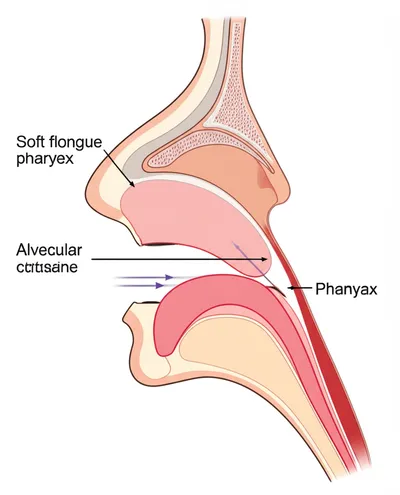
adjective🔗ShareKín, tắc. Formed by closing the mouth and nose passages completely, like the consonants /t/, /d/ and /p/."The teacher's instructions were clear: pronounce the "p" in "stop" with a closed mouth. "Giáo viên hướng dẫn rõ ràng: phát âm âm "p" trong từ "stop" với miệng khép kín lại.phoneticslanguagelinguisticsChat với AIGame từ vựngLuyện đọc
adjective🔗ShareKín. Having the sound cut off sharply by a following consonant, like the /ɪ/ in pin."The teacher's voice was closed, almost inaudible, over the loud classroom chatter. "Giọng cô giáo bị bít lại, gần như không nghe thấy gì giữa tiếng ồn ào của lớp học.phoneticslanguagewordsoundChat với AIGame từ vựngLuyện đọc